5 Steps to Implement AI-Driven Customer Support Effectively
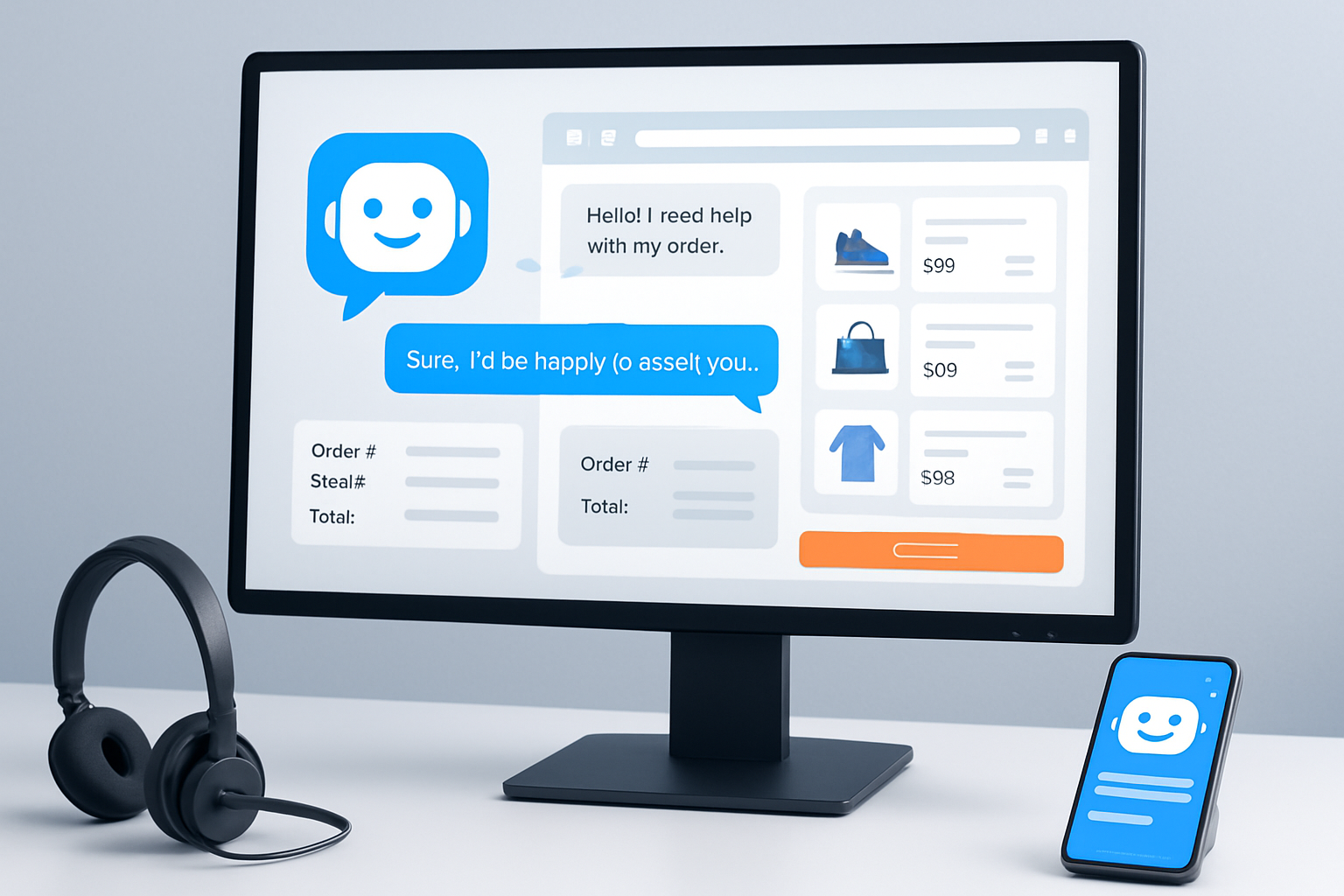
71% of ecommerce shoppers in 2026 expect a brand to reply within two minutes, no exceptions. Miss that window, and your competitor is just a click away, often using AI to answer faster, smarter, and at scale. Knowing how to implement ai-driven customer support in ecommerce isn’t just a tech upgrade; it’s a survival strategy in a market where response speed and personalization drive loyalty, and revenue.
Today’s best-in-class brands are outpacing old-school customer service by deploying AI chatbots, smart ticketing, and proactive outreach that anticipates questions before they’re asked. Shopify merchants, in particular, are using specialized AI apps to automate support, slash response times, and even generate helpful content on the fly. If you’re still relying on human-only support or outdated bots, you’re betting against the trend, and losing ground every month.
Table of Contents
- 1. Audit Your Current Support Workflow, Identify Friction and Opportunity
- 2. Choose the Right AI Tools for Ecommerce, Features That Matter in 2026
- 3. Integrate and Train Your AI, Data Quality Is Everything
- 4. Measure Performance and Customer Impact, Prove ROI or Pivot Fast
- 5. Scale and Personalize, The 2026 Edge in AI-Driven Customer Support
- Frequently Asked Questions About how to implement ai-driven customer support in ecommerce
- Take the First Step: AI-Driven Support Is the New Standard
1. Audit Your Current Support Workflow, Identify Friction and Opportunity
Before rushing into AI adoption, you need a forensic-level understanding of your current customer support process. This isn’t just “where do tickets come from?” but a granular breakdown: what questions clog your queue, which hours see spikes, and where do customers drop off in frustration?
- Ticket Volume by Channel: Analyze real 2026 data, most ecommerce brands see 62% of support queries originate via live chat, 25% via email, and the rest split between WhatsApp and self-serve forms.
- Common Repetitive Requests: Use tools like Shopify Reports or OCS - All Contact Form Builder to categorize top queries (e.g., “Where’s my order?”, “How do I apply a discount?”).
- Peak Times & SLA Gaps: Heatmap your support load by hour and day. Many stores still experience 40% SLA breaches during seasonal surges (notably, October’s Black Friday buildup).
- Agent Efficiency Metrics: Track first-response time, handle time, and escalation rates. If your median resolution time is over 10 minutes, AI can cut that by 50%.
For example, an apparel retailer using Shopify in Fall 2025 found that 70% of support tickets were order tracking or return-related, ripe for automation. After mapping out these repetitive queries, they set a benchmark goal: automate at least 60% of requests before the holiday rush.
2. Choose the Right AI Tools for Ecommerce, Features That Matter in 2026
Generic chatbots are obsolete. The 2026 ecommerce standard demands AI that understands context, integrates natively with Shopify, and supports real-time multichannel messaging. Going with the wrong tool leads to broken handoffs and customer churn.
- Shopify Integration: AI support tools should live where your customers are, think OCS Sticky Chat, Multi Agent for on-site chat, or Vatdi, AI Chatbot Support for natural WhatsApp conversations.
- Natural Language Processing (NLP): Don’t settle for keyword-based bots. Top performers in 2026 use GPT-4.5 or better for nuanced, human-like responses.
- Omnichannel Sync: Customers might start a chat on your store but finish on WhatsApp. Look for AI tools that unify sessions and context across platforms.
- Knowledge Base Automation: Solutions like Product FAQ Generator, OCS instantly draft and update support articles from real queries, reducing agent workload by up to 40%.
A leading electronics Shopify store deployed Vatdi, AI Chatbot Support last spring and saw ticket deflection rates jump from 25% to 68%—customers got real-time answers across web and WhatsApp, and agent bandwidth doubled overnight. For pricing, always check individual app sites for the latest rates, as 2026 offerings frequently update features and tiers.
3. Integrate and Train Your AI, Data Quality Is Everything
AI is only as smart as the data it learns from. Dumping it into your store without tailored training guarantees off-brand or inaccurate answers, a fast track to customer complaints. Successful brands treat AI onboarding like hiring a top-tier agent.
- Import Historical Interactions: Feed the AI your last year’s chat logs, ticket histories, and FAQ content. Tools like BlogBotz | AI Blog Maker also help by analyzing your own blog for context-specific responses.
- Customize Tone and Policies: Teach your AI about brand language, escalation triggers, and refund policies. OCS Engine customers use custom scripts to align chatbot tone with their brand.
- Continuous Learning Loop: Set up weekly reviews of AI-handled tickets. Flag errors, retrain responses, and update knowledge bases, don’t expect perfection out of the box.
- Data Privacy Compliance: With stricter 2026 privacy laws, verify your AI tools offer encryption, GDPR/CCPA compliance, and clear data retention controls.
One specialty beauty brand trained its AI using a curated dataset of 15,000 real customer chats, resulting in a 92% initial accuracy rate. By the end of Fall 2025, after three quarterly retraining cycles, they hit 97%—with customer satisfaction (CSAT) scores improving by 26%.
4. Measure Performance and Customer Impact, Prove ROI or Pivot Fast
No executive funds AI “because it’s trendy”—you need proof of impact. In 2026, best-in-class ecommerce teams obsessively track support automation metrics and adjust fast when results lag expectations.
- Automation Rate: What percentage of queries are resolved end-to-end by AI? Top Shopify stores average 65%+ resolution without human touch.
- Time to First Response (TTFR): Customers demand replies under 60 seconds. AI routinely delivers sub-5-second responses, compared to human average of 3 minutes.
- CSAT and NPS Scores: Use survey popups post-chat to measure satisfaction. Brands using OCS Engine apps report CSAT increases of 15-30% within two quarters of deploying AI-driven support.
- Revenue Impact: Track conversion rates on discount links sent via AI (using Smart Discount Affiliate Links). In 2026, one home goods brand reported 18% higher average order value (AOV) from AI-driven chat interactions.
Compare these KPIs against pre-AI baselines. If you’re not seeing at least a 2x reduction in response times and 20% ticket volume drop, revisit your workflow or dataset, AI should pay for itself within a quarter, or it’s the wrong implementation.
5. Scale and Personalize, The 2026 Edge in AI-Driven Customer Support
Once your AI is handling routine queries, shift focus to proactive and personalized experiences, this is where market leaders pull ahead. The question of how to implement ai-driven customer support in ecommerce is moving from “how do I automate?” to “how do I tailor every touchpoint?”
- Proactive Outreach: Use estimated delivery tools (like Estimated Delivery Date, OCS) to trigger AI-driven updates before customers ask, cutting “Where’s my order?” tickets by 50%.
- Dynamic Discounts: AI can spot hesitancy in chat and offer personalized discount links instantly, boosting conversion in real time.
- Upsell & Cross-Sell: AI support recognizes purchase history and recommends relevant add-ons, fashion brands using OCS Engine’s suite saw a 22% lift in post-purchase upsells this fall.
- Multilingual Support: 2026 tools now provide native-quality translation. Retailers selling cross-border report 38% higher satisfaction scores after deploying AI chat in Spanish, French, and German.
For instance, a global sneaker store combined OCS Sticky Chat with AI-powered FAQs and saw its customer support cost per order drop by 35% while increasing repeat purchase rates by 14%. The real differentiator isn’t just response speed, but AI’s ability to create micro-moments of delight, personal touches at scale that no human team could match.
Frequently Asked Questions About how to implement ai-driven customer support in ecommerce
How long does it take to fully implement AI-driven customer support in Shopify stores?
With modern Shopify apps like Vatdi, AI Chatbot Support, most stores achieve full AI rollout in 2-4 weeks. Complex setups or large datasets may require 6-8 weeks, especially if custom integrations or multilingual support are needed.
Is AI-driven chat support better than live agents for complex queries?
AI is best for handling repetitive, high-volume questions. For complex or emotionally sensitive issues, human agents still deliver superior results. The most effective ecommerce support blends AI for speed and humans for nuance.
What’s the difference between a regular chatbot and an AI-powered support tool?
Traditional chatbots rely on scripted responses and struggle with anything unexpected. AI-powered tools use advanced language models (like GPT-4.5) to understand context, learn from data, and adapt over time, delivering much more natural and accurate support.
How do I measure ROI on AI-driven customer support?
Track metrics like automation rate, first response time, CSAT, NPS, and ticket deflection. Calculate labor cost savings and conversion uplift from AI-generated interactions. Most brands set quarterly benchmarks to assess whether AI is meeting ROI targets.
Are there risks to automating too much of my customer support?
Yes, over-automation can frustrate customers if escalations to humans aren’t smooth. Regularly audit AI conversations for quality and always offer a “talk to a real person” option to maintain trust and flexibility.
Take the First Step: AI-Driven Support Is the New Standard
Brands that get serious about how to implement ai-driven customer support in ecommerce are rewriting customer expectations, and their bottom lines. Start by mapping your support pain points, trialing Shopify-native AI apps, and tracking the impact. In 2026, the difference between strong and weak support is AI, make sure your store is on the winning side.