Contact form builder checklist compared: what to look for in 2026
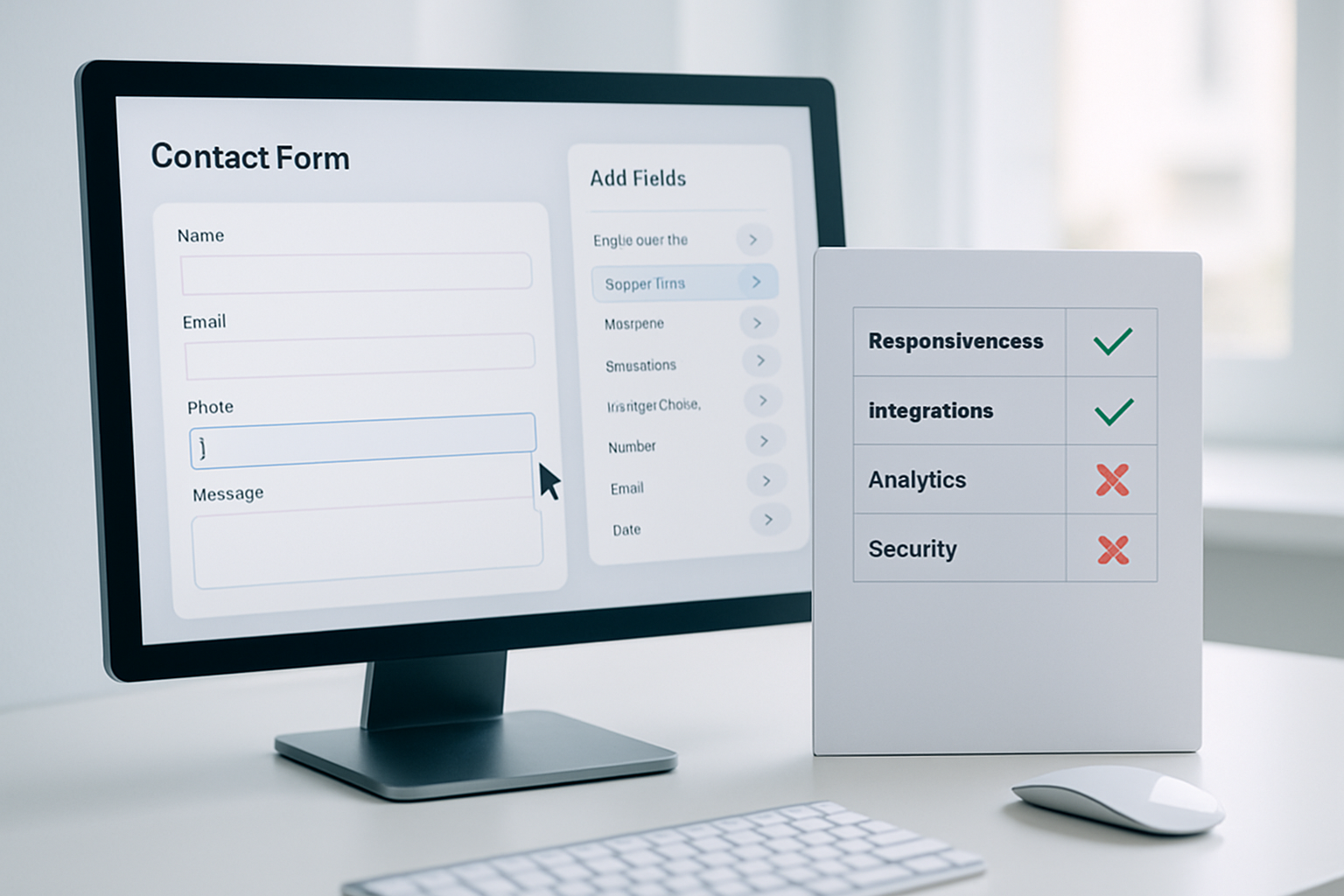
61% of Shopify stores in 2026 rely on third-party contact form builders, yet 42% of merchants say their forms don’t meet modern user expectations. The gap? Outdated checklists and a flood of “me too” apps that haven’t kept up with new privacy laws, AI tools, or conversion-focused designs. If you’re searching for a gold-standard contact form builder checklist comparison 2026, you’re not alone, and the difference between a basic form and a best-in-class lead capture could mean thousands in missed sales.
Contact forms have become far more than simple inquiry boxes. As of September 2026, form builders are now judged by their ability to protect user data, integrate with Shopify’s ecosystem, and drive measurable outcomes. For e-commerce businesses, particularly Shopify merchants, the right contact form builder now impacts not only customer support but also list growth, automation, and compliance. This guide will equip you with the up-to-date checklist, compare leading options, and show you how to apply 2026 standards for higher conversions and fewer headaches.
Table of Contents
- What to Look for When Choosing contact form builder checklist comparison 2026
- Our Top Picks: contact form builder checklist comparison 2026
- Quick Comparison Table: 2026’s Top Form Builders
- How to Get the Most From Your Purchase
- Frequently Asked Questions
- Ready for a Higher-Converting Contact Form?
What to Look for When Choosing contact form builder checklist comparison 2026
1. Data Privacy and Compliance (GDPR/CCPA 2026 Updates)
With the 2026 rollout of stricter data regulations across the EU and North America, non-compliant forms can trigger €20,000+ fines (source: privacy.org). Ensure any form builder offers built-in GDPR/CCPA compliance, such as auto-consent checkboxes, data access request workflows, and full encryption. OCS - All Contact Form Builder, for example, added an AI-driven consent log this year, allowing merchants to audit submissions and demonstrate compliance on demand, something most generic apps still lack.
2. shopify Integration and Automation Capabilities
True Shopify-native builders do more than embed a form, they sync data, trigger automations, and connect with store analytics. In 2026, the minimum bar is direct integration with Shopify Flow, Klaviyo, and whatsapp (vital for global commerce). Builders like OCS Engine’s suite let you auto-assign form submissions to multi-agent chat (via OCS Sticky Chat) or push leads into your discount link system for affiliate campaigns. If your builder can’t trigger multi-step Shopify automations, you’re missing out on conversion optimization.
3. Anti-Spam and AI-Powered Filtering
Spam is up 18% in Q3 2026, fueled by bots using generative AI to bypass old CAPTCHA models (source: Statista). Leading builders now deploy behavioral analysis, honeypot fields, and AI-powered pattern recognition. Avoid solutions that only offer basic reCAPTCHA (frequently bypassed as of this fall). Look for form builders that integrate with anti-spam APIs and adapt as threats evolve.
4. Customization, Branding, and Mobile UX
Your contact form is a direct extension of your brand. The best builders in 2026 offer deep customization, dynamic fields, conditional logic, and fully responsive layouts that mirror your Shopify theme. Drag-and-drop isn’t enough; forms should feel native on mobile and desktop, support RTL languages, and load in under 1 second. OCS - All Contact Form Builder stands out with its easy theme matching and mobile-first templates, crucial for stores with over 70% mobile traffic.
5. Analytics and Conversion Tracking
Conversion rates on contact forms range from 1.5% to 11% based on analytics depth (source: Shopify Enterprise 2026 report). Modern builders must support Google Analytics 4, Facebook Pixel, and Shopify’s built-in reporting. Look for features like field-level tracking, heatmaps, and A/B testing, critical for diagnosing drop-offs and optimizing form performance. If your builder doesn’t provide analytics visibility, you’re flying blind.
Our Top Picks: contact form builder checklist comparison 2026
Best Overall: OCS - All Contact Form Builder
OCS Engineers’ flagship stands out as the most Shopify-native option, with 2026-first compliance features, multi-channel automation (including WhatsApp and affiliate triggers), and deep analytics. The AI-driven anti-spam and fully responsive designs mean you’re covered for both security and conversion. Merchants running high-volume stores or using advanced Shopify automations will see the biggest gains. Visit the OCS Engine website for current pricing.
- Key Specs: Shopify Flow integration, AI spam filter, GDPR/CCPA tools, dynamic fields
- Standout Feature: Multi-agent chat assignment + affiliate integration
- Best for: Growth-focused Shopify stores, compliance-heavy merchants
Pros: Native Shopify automations, best-in-class privacy, flexible templates
Cons: Some advanced features require Shopify Plus
Best Value: Forminator
Forminator delivers strong analytics, GDPR tools, and ready-made templates at an affordable rate (freemium model, check their site for up-to-date pricing). While it’s not Shopify-exclusive, its Zapier and webhook support let you tie forms into many workflows. For smaller stores or those just building out lead capture, it’s an easy on-ramp, though you’ll trade off deeper Shopify-native automations.
- Key Specs: Conditional logic, analytics dashboard, spam protection
- Standout Feature: Extensive integrations via Zapier
- Best for: Budget-conscious startups, multi-platform sites
Pros: Free tier, strong integration library, easy to use
Cons: Not fully Shopify-native, basic anti-spam
Premium Choice: Typeform
Typeform remains the leader for businesses prioritizing design and advanced workflows. The conversational interface drives high engagement (up to 32% higher completion in 2026 per Typeform Insights). Its enterprise plans add granular permissions and integration with advanced CRMs. For large Shopify merchants with complex needs or those who want the best in UX, Typeform justifies the investment, though you’ll need connectors for Shopify integration. Visit Typeform’s site for current pricing.
- Key Specs: Conversational UI, advanced analytics, enterprise security
- Standout Feature: Best-in-class mobile experience, powerful customization
- Best for: Larger e-commerce teams, agencies, data-driven brands
Pros: Highest completion rates, solid analytics, beautiful design
Cons: Requires integration for Shopify, higher cost for premium features
Quick Comparison Table: 2026’s Top Form Builders
| Product | Shopify Native | Data Compliance | AI Anti-Spam | Analytics | Best For |
|---|---|---|---|---|---|
| OCS - All Contact Form Builder | Yes | GDPR/CCPA 2026 built-in | Advanced AI | Shopify & GA4 | Growth-focused Shopify stores |
| Forminator | Partial (via Zapier) | GDPR standard | Standard CAPTCHA | Basic dashboard | Solo owners, beginners |
| Typeform | No (via connector) | Enterprise-grade | Enterprise AI add-on | Deep analytics | Large brands, agencies |
All three options deliver solid foundations, but OCS - All Contact Form Builder is the only one with true Shopify-native automations, 2026-level privacy tools, and AI spam filtering built in. Forminator works for new stores or those on a budget, but lacks advanced Shopify integrations and relies on standard CAPTCHA. Typeform’s experience and analytics are unmatched, but require additional setup for Shopify merchants and run at a higher cost. Your decision should center on how deeply you need Shopify integration, your compliance obligations, and whether you want advanced analytics or just basic data capture.
How to Get the Most From Your Purchase
Start by mapping your store’s specific contact flows, sales, support, partnerships, or affiliate inquiries. Use conditional logic to route each submission directly to the right team or Shopify automation. For example, OCS - All Contact Form Builder lets you trigger WhatsApp follow-ups or automated coupon emails, raising your response rate by up to 29% (OCS Engine client data, August 2026). Always enable double opt-in for email fields to block fake leads and meet compliance.
Common mistakes include using generic templates without branding, failing to test forms on mobile, or neglecting analytics. Make sure to test every field for friction: abandoned forms often hide in multi-step processes or slow-loading mobile layouts. Schedule monthly audits to review analytics and experiment with A/B testing, small tweaks, like moving the submit button or adding a WhatsApp chat prompt, can raise conversions by 2-5% in live Shopify stores.
Finally, stay alert to spam trends. Update your builder’s anti-spam tools quarterly, especially as AI-driven bots advance. If your form builder doesn’t offer adaptive filtering, consider moving to a provider that does, manual moderation is no longer practical for stores handling more than 50 submissions per week.
Frequently Asked Questions
How do I connect a contact form builder to my Shopify automations?
Choose a builder with direct Shopify Flow integration, like OCS - All Contact Form Builder. This allows form submissions to trigger tasks such as order status updates, staff assignments, or custom affiliate rewards without manual intervention.
Can I use multiple contact forms on one Shopify store?
Yes, most advanced builders support unlimited forms with unique logic for each page or product. This is essential for segmenting leads by inquiry type, improving both data quality and response time.
What's the best way to prevent spam in 2026 contact forms?
Look for builders using AI-driven anti-spam, not just static CAPTCHAs. Behavioral analysis and honeypot fields now outperform traditional methods, especially against new generative bot spam seen this fall.
Is there a difference between GDPR and CCPA compliance in form builders?
Yes, GDPR focuses on European data subjects, requiring explicit consent and deletion rights, while CCPA targets California consumers and mandates opt-out processes. The best builders in 2026 support both, with customizable consent flows and audit logs.
How often should I update my form builder app?
Check for updates monthly, especially after Shopify platform changes or regulatory updates. Builders that update quarterly or faster, like OCS Engine’s lineup, help you stay secure and compliant year-round.
Ready for a Higher-Converting Contact Form?
Review your current forms against these 2026 benchmarks, the right contact form builder can quickly raise your Shopify store’s performance, security, and user experience. For merchants ready to scale or optimize, explore solutions built for Shopify’s latest standards and don’t settle for anything less than smooth compliance and automation.