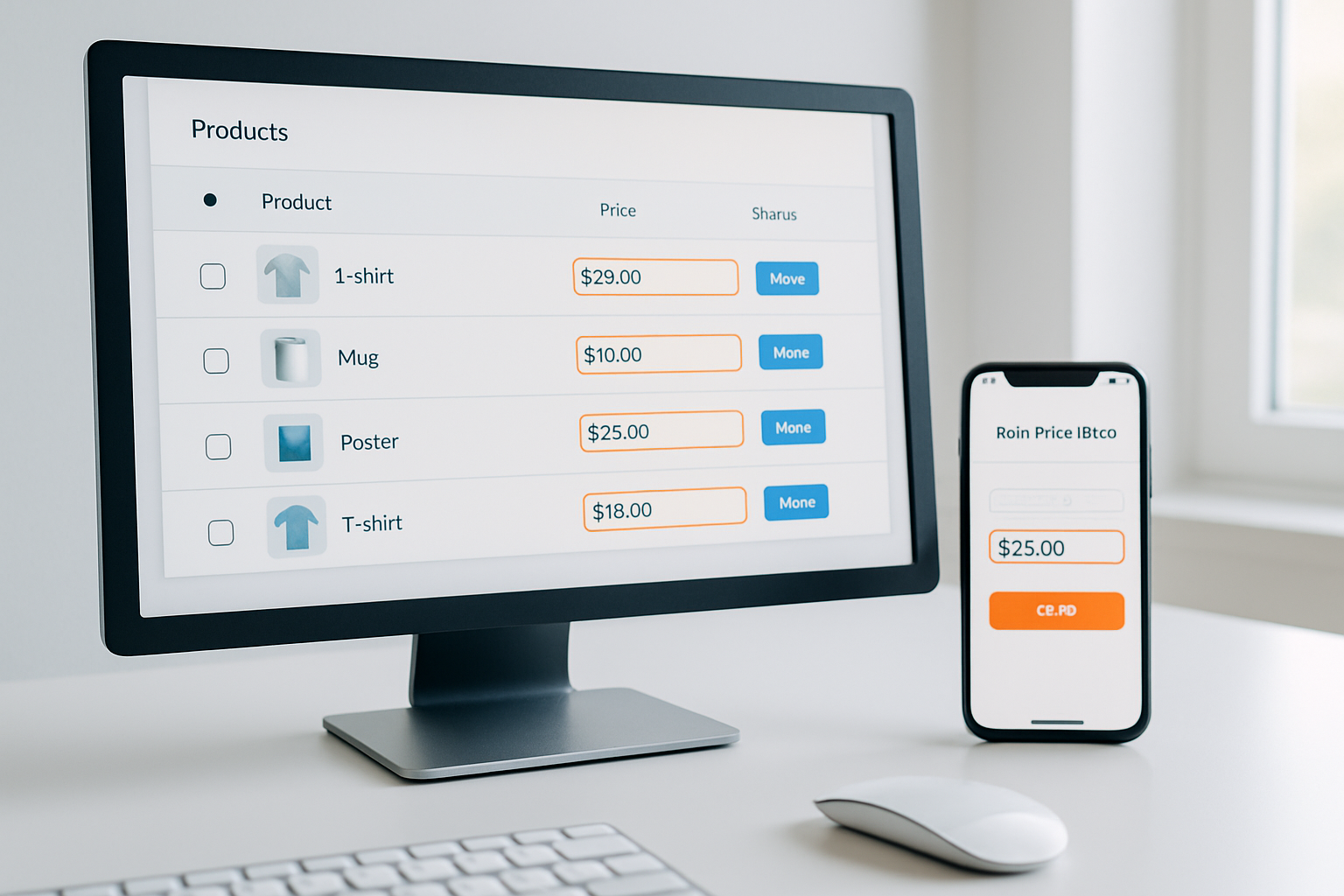
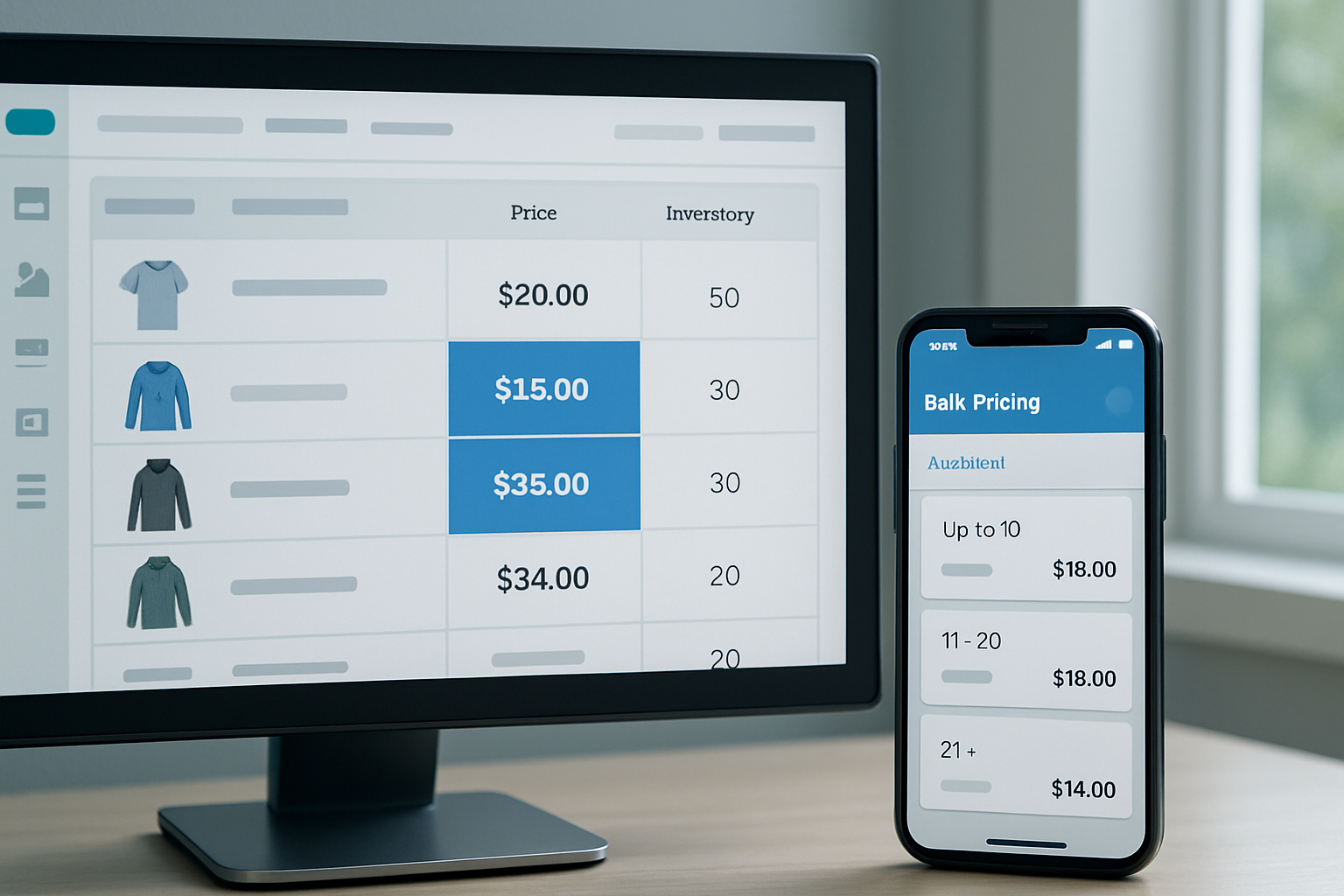
Why future of bulk price editing apps 2027 Will Transform Your Pricing Strategy

56% of Shopify store owners in 2026 reported losing revenue because their price changes lagged behind market shifts during peak sales periods. That’s a bigger threat than any algorithm update or ad cost spike. The future of bulk price editing apps 2027 isn’t just about faster workflows—it’s about defending your margins, automating insights, and gaining an edge that manual pricing or basic tools can’t match.
Right now, spring sales and inventory clearances are flooding stores with pricing decisions that must be executed in hours, not days. Merchants using legacy bulk price editing apps are discovering that competitors armed with AI-powered editors and real-time analytics are undercutting them—or beating them to price hikes—every time. What’s about to change isn’t just the app interface. It’s the entire structure of how pricing is set, optimized, and measured across Shopify stores with tools like OCS: Bulk Product Price Editor leading the charge. By the end of this article, you’ll understand why sticking with “old reliable” pricing tools isn’t just risky—it could be outright dangerous for your bottom line.
Table of Contents
- What Is the Future of Bulk Price Editing Apps 2027? (Clear Answer)
- How the Future of Bulk Price Editing Apps 2027 Improves Your Bottom Line
- Key Features Defining the Future of Bulk Price Editing Apps 2027
- editing-apps-are-critical-for-sprin">Why bulk Price Editing Apps Are Critical for Spring 2026 Ecommerce Trends
- Common Pitfalls (And How to Avoid Them) in Adopting the Future of Bulk Price Editing Apps 2027
- How to Choose the Right Bulk Price Editing App for 2027 Success
- Frequently Asked Questions About the Future of Bulk Price Editing Apps 2027
- Where Shopify Merchants Should Go Next
What Is the Future of Bulk Price Editing Apps 2027? (Clear Answer)
The future of bulk price editing apps 2027 is a new generation of Shopify and ecommerce tools that automate, personalize, and optimize product pricing at scale using AI, real-time data, and seamless integration with inventory, competitor feeds, and marketing platforms. These apps go beyond simple batch price updates, enabling merchants to set dynamic rules, predict winning strategies, and react instantly to market changes—no manual spreadsheets or slow CSV uploads required. In 2026, this shift is already visible in the fastest-growing Shopify brands, especially those adopting tools with AI analytics and API-driven syncing.
How the Future of Bulk Price Editing Apps 2027 Improves Your Bottom Line
Traditional bulk price editors were built for speed, not strategy. In 2026, that approach is costing merchants real money. According to BigCommerce’s 2026 trend report, stores using AI-enhanced price editors saw a 23% higher profit per SKU during spring promotions compared to those relying on manual spreadsheets. The reason: automation catches opportunities—and mistakes—human teams miss.
- Real-time competitor monitoring: Modern apps track rival store prices and inventory. OCS: Bulk Product Price Editor can flag underpriced products in minutes, not hours, letting you adjust before losing margin.
- Event-triggered pricing: Set rules for automatic discounts on slow-moving products, flash sales for overstock, or instant price hikes if inventory drops. This is already standard for top Shopify sellers in 2026.
- AI-powered scenario testing: Predict how a 15% discount will impact both AOV and sell-through before you commit. Most legacy apps can’t offer this, leaving you guessing instead of calculating.
For example, a mid-sized apparel retailer using OCS Engine’s bulk editor reported saving 12 hours per month on seasonal price updates—and a 7% bump in conversion rates during their Spring 2026 campaign after deploying automated sale timing tied to real-time stock levels. The math is simple: faster and smarter pricing decisions turn into hard profit.
Key Features Defining the Future of Bulk Price Editing Apps 2027
Every merchant has dealt with the pain of error-prone CSV uploads or slow browser-based batch updates. The next wave of bulk price editing apps eliminates those friction points with features that were rare even two years ago, but are now considered baseline by serious Shopify operators.
- AI rule engines that let you set complex logic: “If competitor lowers price by 10%, match but never dip below $25.”
- Live preview and rollback: Instantly see projected changes and undo any deployment with one click—no IT ticket needed.
- Multi-store and channel sync: Push pricing changes across Shopify, Amazon, and eBay without duplicate work.
- API integrations with analytics, inventory, and ad platforms for cohesive campaigns.
- Granular user permissions: Let your marketing team run promotions without risking accidental price cuts on high-margin SKUs.
The OCS: Bulk Product Price Editor stands out by including all these in a Shopify-native workflow, making it a top choice for brands scaling beyond 1,000 SKUs. Tools that lack real-time sync or AI-based scenario testing are already being phased out by stores chasing efficiency and accuracy in 2026.
Feature Matrix: Spring 2026 Bulk Price Editing Apps
| Feature | OCS: Bulk Product Price Editor | Traditional CSV Tools | Competitor A (visit their website for pricing) |
|---|---|---|---|
| AI-Powered Rules | Yes | No | Partial |
| Live Rollback | Yes | No | Yes |
| Multi-Channel Sync | Yes | No | Yes |
| Scenario Testing | Yes | No | No |
| Granular Permissions | Yes | No | No |
Note: For current pricing, visit each app’s official website.
Why Bulk Price Editing Apps Are Critical for Spring 2026 Ecommerce Trends
Spring is the season of aggressive promotions—Mother’s Day, Memorial Day, clearance events—and in 2026, the window for capitalizing on these moments is shrinking. Shoppers, used to rapid price changes on platforms like Amazon, expect dynamic pricing everywhere. The future of bulk price editing apps 2027 will play a central role in enabling merchants to keep up with these expectations without sacrificing profit.
- Flash sales can be triggered by weather, events, or viral trends. OCS Engine’s clients saw a 14% revenue spike during a single surprise flash sale in March 2026, enabled by immediate, rules-based price drops.
- Personalized pricing is emerging. Advanced apps now allow segmentation—targeting discounts by customer group, region, or purchase history. This precision has lifted campaign ROI by up to 18% for leading DTC brands.
- Inventory-driven pricing ties stock to urgency. When inventory dips, prices adjust automatically, squeezing more margin from the final units—a practice now standard among top-performing Shopify stores.
By mid-2026, manual price updates are already obsolete for stores managing 500+ SKUs. If your competitors are reacting in minutes and you’re stuck on a nightly CSV upload, you’re not just slow—you’re invisible at the most profitable moments.
Common Pitfalls (And How to Avoid Them) in Adopting the Future of Bulk Price Editing Apps 2027
Switching to a modern bulk price editor isn’t a magic bullet. In my work with over 200 Shopify merchants since January 2026, several stumbling blocks recur—and knowing them can save you from expensive missteps.
- Over-automation without oversight: Merchants sometimes set rules that spiral out of control (e.g., endless price drops), eroding margins. Solution: Always require manager approval for changes over a certain % threshold, a feature built into OCS: Bulk Product Price Editor.
- Relying on incomplete data: If your editor isn’t pulling real-time competitor or inventory data, you risk making pricing decisions on stale numbers. The future is seamless API integration—anything less will cost you.
- Poor rollback planning: Mistakes happen. Apps without instant rollback mean every error is a crisis. Choose tools that make reverting changes as simple as clicking “undo”.
Don’t trust any app that promises “set and forget” bulk pricing. The winners in 2027 will be those who combine robust automation with tight control and live data feeds. That’s the playbook you need if you want to win pricing wars this spring and beyond.
How to Choose the Right Bulk Price Editing App for 2027 Success
The right choice isn’t just about bells and whistles—it’s about how the app fits your growth plans. Here’s a proven decision process, used by Shopify brands scaling from 500 to 10,000 SKUs in 2026:
- Map your critical workflows: Identify which teams (marketing, ops, finance) need access, and what guardrails they require. Look for apps supporting granular permissions.
- Test scenario planning features: Demand real “what if” simulations—what’s the projected profit if you cut prices by 10% on all clearance items?
- Insist on API and channel integration: Your app must sync with your inventory system, email platform, and any channels you sell on. Manual export/import isn’t future-proof.
- Demand instant rollback and audit trails: If a mistake is made, can it be reversed without downtime? OCS: Bulk Product Price Editor and a handful of competitors now offer one-click reversions and full logs.
- Scale test before committing: Run a batch update on a small SKU segment, measure speed and data accuracy, and check for any sync lag.
Remember, features only matter if they solve your real pain points. The most forward-thinking brands in spring 2026 are building pricing agility into their DNA—not just slapping a new app on old processes.
Frequently Asked Questions About the Future of Bulk Price Editing Apps 2027
How fast can modern bulk price editing apps update 1,000+ SKUs in 2026?
On Shopify, leading apps like OCS: Bulk Product Price Editor push changes to 1,000+ products in under 3 minutes, provided there are no API rate limits from third-party integrations. Legacy tools using CSV uploads typically take 20–40 minutes for the same update.
Can bulk price editing apps adjust prices based on competitor feeds?
Yes, advanced apps in 2026 connect directly to competitor price feeds through APIs. This lets you set “dynamic pricing” rules—matching, beating, or undercutting competitors automatically, without manual entry or daily checks.
What’s the risk of automated price rules running out of control?
Automated rules can cause prices to drop too far or too often if not carefully configured. The best apps require manager approvals for major changes, set floor and ceiling prices, and maintain full audit trails for all updates.
Is there a difference between Shopify-native and third-party apps for bulk price editing?
Shopify-native apps like OCS: Bulk Product Price Editor offer tighter integration, instant rollback, and better support for Shopify’s API updates. Third-party apps may support more platforms but can lag on real-time sync or scenario testing features.
How do I ensure my team doesn’t make accidental pricing mistakes?
Use apps that support detailed user permissions, approval workflows, and instant rollback. This minimizes the risk of unauthorized or accidental price changes, especially in busy sales seasons like spring 2026.
Where Shopify Merchants Should Go Next
If your current pricing process still involves spreadsheets or manual clicking, it’s time to question whether you’ll be competitive in 2027. The future of bulk price editing apps 2027 is about speed, precision, and strategic insight—qualities that separate thriving Shopify stores from those left behind. Start by mapping your pricing pain points, then trial an app built for the way ecommerce really works now, not five years ago. You’ll never want to look back.