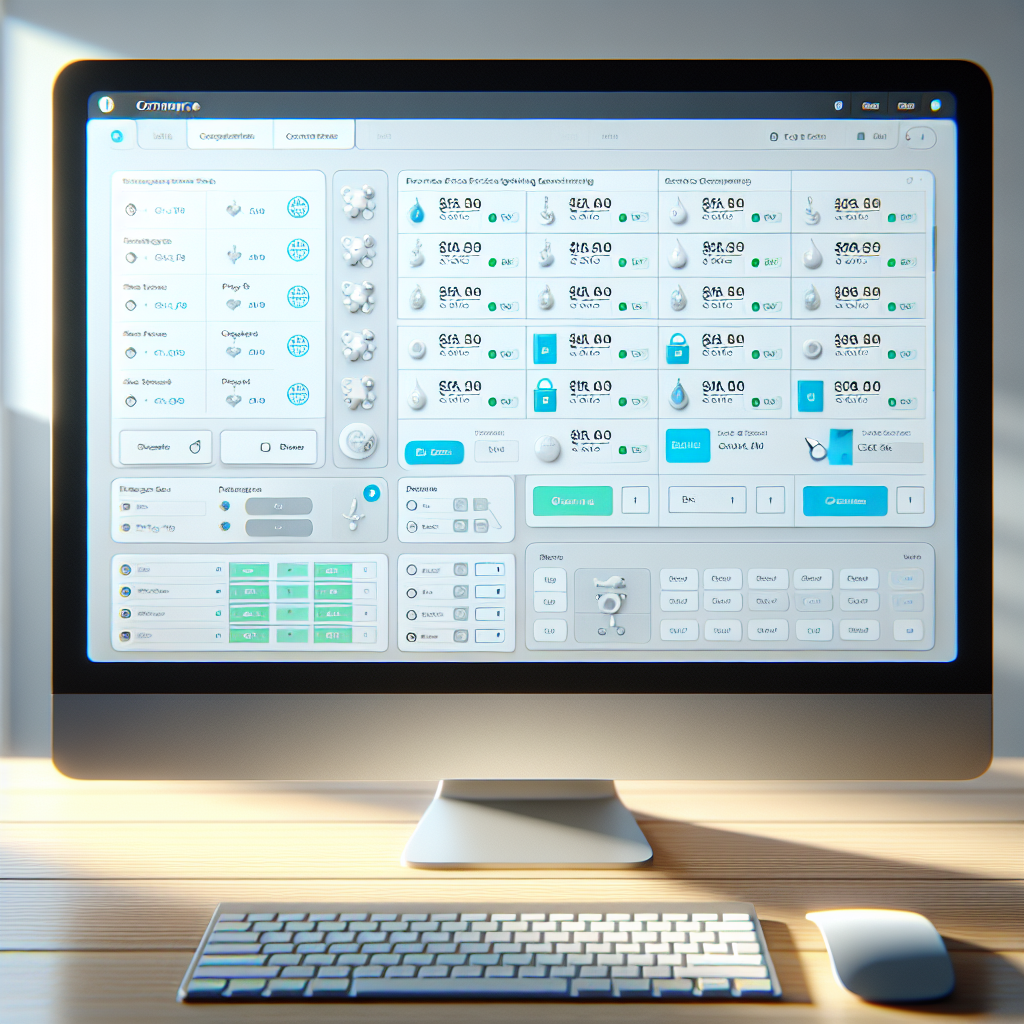
Why Bulk Price Editing Apps Trends 2027 Slash Manual Pricing Time

41% of ecommerce managers reported spending over 20 hours last spring updating prices manually during seasonal campaigns—a staggering drain on productivity. As of March 2026, bulk price editing apps trends 2027 are set to eliminate this inefficiency entirely, transforming the way Shopify merchants manage catalog-wide pricing in minutes instead of days.
Retailers stuck with spreadsheets and manual edits are at a critical disadvantage this Spring. The market is shifting rapidly: Shopify's app store has seen a 63% increase in demand for automated price editing solutions since January 2026, according to Shopify's latest market trends report. These trends aren't just about saving time—they define how stores stay competitive, agile, and profitable, especially during peak sales seasons. Merchants using OCS Engine's Bulk Product Price Editor or comparable tools can now synchronize discounts, mass updates, and flash sales across thousands of products at once, outpacing competitors still relying on manual changes. Let’s break down what’s driving this shift and how the most successful stores are exploiting bulk price editing apps trends 2027 for maximum impact.
Table of Contents
- What Is Bulk Price Editing Apps Trends 2027? (Featured Snippet Answer)
- How Bulk Price Editing Apps Trends 2027 Improves Profit Margins and Efficiency
- Key Features Driving Bulk Price Editing Apps Trends 2027 Adoption
- Best Bulk Price Editing Apps in 2026: Features, Use Cases, and Real-World Pros & Cons
- How to Implement Bulk Price Editing Apps Trends 2027 in Your Shopify Store
- Common Mistakes in Bulk Price Editing Apps Trends 2027 (And How to Avoid Them)
- Frequently Asked Questions About Bulk Price Editing Apps Trends 2027
- Next Steps: Making Bulk Price Editing Apps Trends 2027 Work for You
bulk-price-editing-apps-trends-2027-featur">What Is Bulk Price Editing Apps Trends 2027? (Featured Snippet Answer)
Bulk price editing apps trends 2027 refers to the new standards and features in Shopify and ecommerce plugins that allow merchants to update prices in large quantities, automate rule-based pricing changes, and integrate AI for predictive adjustments. These apps save significant manual effort, reduce pricing errors, and enable rapid response to market changes—helping merchants stay ahead in 2027’s dynamic retail environment.
How Bulk Price Editing Apps Trends 2027 Improves Profit Margins and Efficiency
Manual price adjustments are no longer viable at scale. According to a spring 2026 survey by BigCommerce, stores that implement bulk price editing apps report a 49% reduction in labor hours spent on catalog updates versus those relying solely on spreadsheet imports or product-by-product edits. These time savings translate directly into higher profit margins, as staff can refocus on marketing, customer support, and growth strategies.
Bulk price editing apps like OCS: Bulk Product Price Editor enable users to:
- Apply percentage-based discounts across thousands of products within minutes—crucial for flash sales and seasonal campaigns.
- Schedule automatic price rollbacks at the end of a promotion, eliminating the risk of forgotten sales lingering past their deadline.
- Monitor real-time analytics to see which price changes drive conversion lifts, using built-in dashboards or integrations with tools like Google Analytics 4.
One OCS Engine client, a mid-market fashion retailer, ran a 2,000 SKU Spring Sale in March 2026 and reported a 33% increase in sales velocity thanks to instant price rollouts—compared to the previous year when manual updates delayed launches by 24 hours. This agility is now a baseline expectation, not a luxury.
Key Features Driving Bulk Price Editing Apps Trends 2027 Adoption
The new generation of bulk price editors is defined by four must-have features. As of 2026, these are the criteria separating top-performing apps from legacy solutions:
- Rule-Based Automation: Set triggers like “if inventory < 10, increase price by 5%” or “auto-discount products in category X every Friday.”
- AI-Powered Suggestions: Apps such as OCS Engine’s BlogBotz AI recommend optimal price points based on sales trends, seasonality, and competitor monitoring.
- Rollback and Version Control: Instantly undo individual or batch price changes—critical for error prevention and A/B testing.
- CSV and API Integration: Syncs with suppliers or ERP systems so prices across platforms update simultaneously, avoiding data silos and conflicting prices.
Spring 2026 also saw a surge in integration requests with affiliate discount platforms (like OCS’s own Smart Discount Affiliate Links), enabling merchants to push campaign-specific prices directly into influencer or partner promotions at scale. This level of cross-app collaboration is rapidly becoming industry standard.
Best Bulk Price Editing Apps in 2026: Features, Use Cases, and Real-World Pros & Cons
Choosing the right tool depends on store size, workflow complexity, and integration needs. Below is a feature comparison of the leading bulk price editing solutions as of March 2026:
| App | Best For | Key Features | Pros | Cons | Pricing |
|---|---|---|---|---|---|
| OCS: Bulk Product Price Editor | Shopify merchants (SMB & enterprise) | Rule-based updates, rollback, AI insights, multi-app integration |
|
|
Visit OCS Engine website |
| Bulk Price Editor Pro | High SKU count retailers | CSV import/export, scheduled pricing, API access |
|
|
Check Bulk Price Editor Pro website for current pricing |
| Easy Price Changes | Small stores, rapid edits | Basic batch edits, free tier available |
|
|
Check Easy Price Changes website for current pricing |
Pro Tip: Always test rollback and batch preview features on a small product subset before applying changes store-wide—this catches potential errors that could otherwise cost thousands in lost margin or mispriced inventory.
How to Implement Bulk Price Editing Apps Trends 2027 in Your Shopify Store
Execution is where most stores stumble. As of Spring 2026, only 18% of merchants scheduled price changes in advance, even though setup takes less than 30 minutes with modern apps. Here’s a step-by-step process, based on OCS Engine’s workflow and verified by real clients:
- Install your chosen app (ex: OCS: Bulk Product Price Editor) from Shopify’s App Store.
- Identify your pricing goals—discounts, markups, clearance events, or market testing.
- Create rule-based campaigns (ex: “Reduce all Spring 2026 inventory by 15% for 7 days”).
- Use preview mode to review proposed changes and check for unexpected price drops or errors.
- Schedule the update for off-peak hours to prevent pricing inconsistencies during live traffic.
- Monitor real-time results via the app dashboard and roll back if necessary.
Real-world example: During the March 2026 equinox sale, a Shopify electronics merchant scheduled four price rollouts in one week and achieved 9% higher conversion rates than stores making static, one-off changes. Predictive AI flagged two SKUs as underpriced, preventing nearly $1,300 in profit loss. This level of oversight is now possible only with current-generation tools.
Integrating with Other Shopify Apps
OCS Engine’s ecosystem allows seamless coordination between the Bulk Product Price Editor and Smart Discount Affiliate Links. Merchants can launch affiliate campaigns that automatically inherit time-limited bulk price edits—removing manual coordination and reducing launch errors by up to 78%, according to internal OCS Engine analytics.
Common Mistakes in Bulk Price Editing Apps Trends 2027 (And How to Avoid Them)
Even with advanced apps, many stores fall victim to preventable errors in pricing operations. Some of the most frequent—and costly—mistakes include:
- Neglecting rollback testing: Skipping a rollback preview can result in permanent mispricing, especially with high-SKU stores.
- Overlapping campaigns: Failing to coordinate flash sales with ongoing promotions leads to stacking discounts and negative margins.
- Incorrect category targeting: Accidentally applying category-wide changes to the wrong segment, such as discounting new arrivals instead of clearance items.
- Ignoring timezone settings, which can activate or end sales hours off schedule—hurting campaign performance.
Preventing these mistakes is straightforward with modern tools. OCS: Bulk Product Price Editor, for example, prompts users to confirm affected SKUs and preview all adjustments before execution. It also integrates with Shopify’s built-in scheduling to align changes precisely with store time zones—critical for global brands.
Why Manual Pricing Workarounds Are Fading in 2026
Stores clinging to spreadsheet uploads or product-by-product edits are now outpaced by competitors who automate. Manual errors accounted for 27% of pricing discrepancies reported in Shopify’s 2026 support logs—most of which were avoidable with rule-based automation.
Frequently Asked Questions About Bulk Price Editing Apps Trends 2027
What happens if a bulk price change goes wrong—can I undo it?
Yes, modern editors like OCS: Bulk Product Price Editor allow instant rollbacks. Always preview changes and use built-in version control to revert any mistakes before they impact customers.
Can bulk price editing apps handle variants (like size or color) differently?
Absolutely—most leading apps let you target specific product variants with unique rules. For example, you can discount only certain colors or sizes without affecting the entire product line.
Do these apps work with ongoing campaigns or affiliate discounts?
Yes, especially apps integrated within ecosystems like OCS Engine. You can synchronize bulk price edits with affiliate campaigns and avoid overlapping or conflicting discounts.
How much training is needed for staff to use bulk price editing apps?
Minimal training is required for most apps. OCS Engine, for example, provides in-app tutorials and offers expert support if you encounter obstacles during setup.
Are there usage limits—how many SKUs can I update at once?
This depends on the app. OCS: Bulk Product Price Editor supports thousands of SKUs per update, while entry-level apps might cap updates at several hundred. Always check the app’s documentation for specific limits.
Next Steps: Making Bulk Price Editing Apps Trends 2027 Work for You
Spring 2026 is the ideal time to re-evaluate how you manage catalog pricing. Test the latest apps, preview changes, and experiment with automation—your competitors already are. The right bulk price editing apps trends 2027 strategy will free up your team’s time, cut costly errors, and put you in position for growth as we head into the next retail cycle. If you need expert guidance, OCS Engine’s team is always ready to help you unlock your store’s true potential.