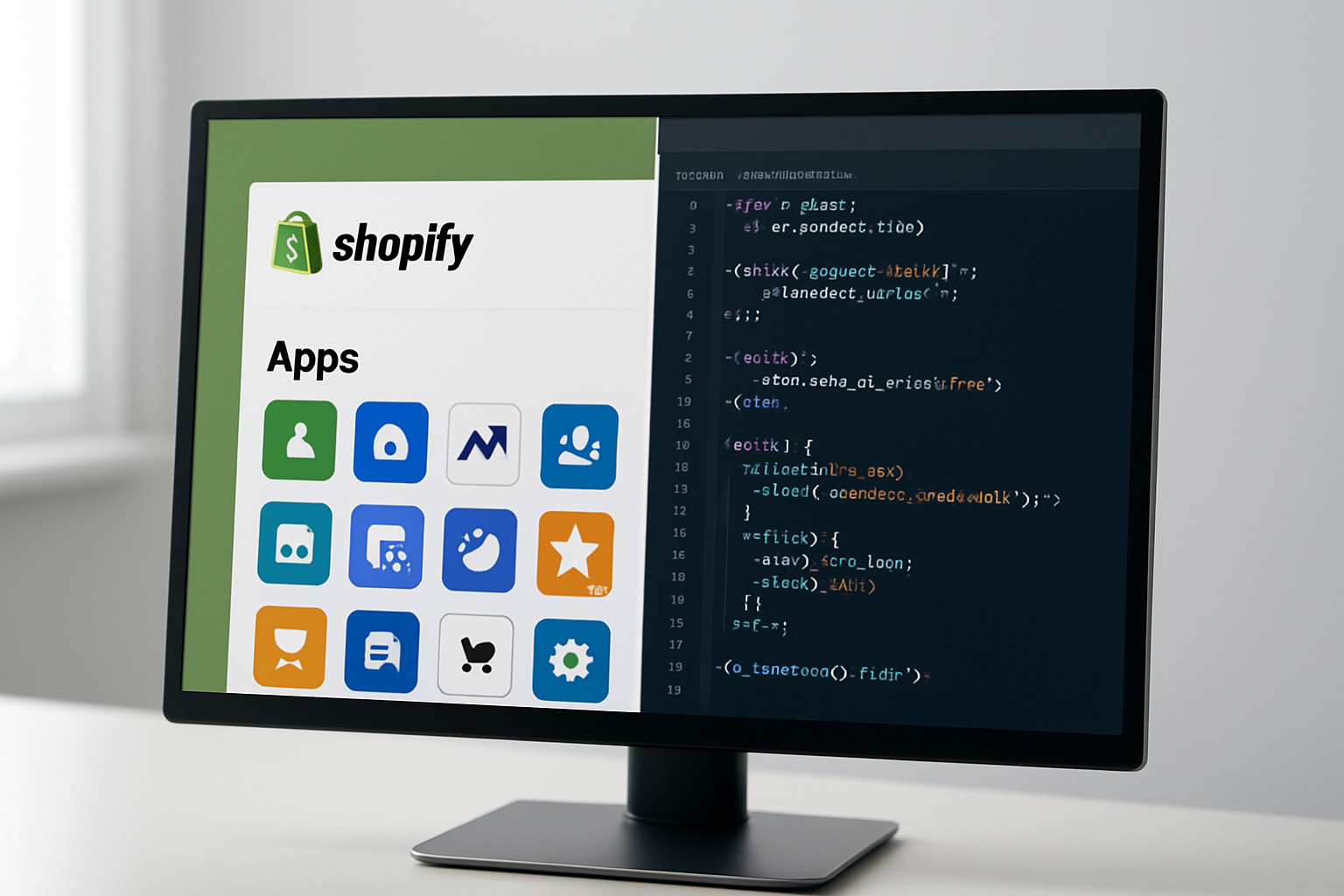
86% of Shopify merchants plan to upgrade their tech stack before Q2 2027, but most are torn between off-the-shelf Shopify apps and expensive custom development. As "shopify apps vs custom trends 2027" emerges as the top search among e-commerce leaders this fall, the choice isn’t just technical, it’s existential. Get this decision wrong, and your storefront could be stuck in 2024 while your competitors sprint past with lightning-fast features and AI-powered integrations.
Shopify’s app ecosystem has exploded, over 12,000 apps as of September 2026 (source: Shopify App Store), covering everything from conversion optimization to AI-driven customer support. But pre-built apps aren’t a silver bullet. Custom development remains on the radar for brands with unique needs, competitive ambitions, or regulatory obligations. The right call hinges on growth goals, budget, tech skills, and how fast your business needs to move. Bookmark this guide for a tactical breakdown: you’ll see where ready-made apps like OCS Sticky Chat or Smart Discount Affiliate Links shine, and where only custom code delivers. If you sell, manage, or advise on Shopify, you can’t afford to miss these shopify apps vs custom trends 2027 insights.
Table of Contents
- Quick Overview: Shopify Apps vs Custom Development, What’s Really at Stake?
- Shopify Apps: Features, Strengths, and Use Cases
- Custom Development: Features, Strengths, and Use Cases
- Shopify Apps vs Custom Development: 2027 Comparison Table
- Key Differences That Matter for Shopify Apps vs Custom Trends 2027
- The Verdict: Shopify Apps or Custom Development for 2027?
- Frequently Asked Questions About Shopify Apps vs Custom Trends 2027
- Where Do You Start?
shopify-apps-vs-custom-development-">Quick Overview: Shopify Apps vs Custom Development, What’s Really at Stake?
The Shopify app marketplace is the world’s largest e-commerce plugin hub, with over 12,000 apps live and 400+ new apps launched since February 2026 alone (Shopify Platform Data, 2026). These apps let merchants add features, WhatsApp support, AI chatbots, dynamic discount links, often with a single click. Solutions like OCS Engine’s suite are designed for immediate impact: install, configure in minutes, and launch. For most stores, this means faster time-to-value and predictable costs.
Custom development, by contrast, covers everything from bespoke app builds to API integrations and theme modifications. Here, you dictate every detail: custom workflows, headless commerce, or regulatory compliance unique to your market. According to the 2026 Shopify Agency Benchmark Report, custom builds are up 21% YoY among DTC brands scaling past $10M in annual sales. But the trade-off is complexity: longer timelines, higher upfront costs, and ongoing maintenance risks.
Why does this split matter now? Because Q4 2026’s e-commerce surge has exposed the gaps: off-the-shelf apps don’t always solve for localization, speed, or brand-specific workflows. Meanwhile, custom builds can outpace the app store, if you have budget and a clear roadmap. As 2027 approaches, the shopify apps vs custom development debate defines who grows fastest, who controls their destiny, and who gets left behind.
Shopify Apps: Features, Strengths, and Use Cases
Shopify apps are plug-and-play solutions vetted by Shopify’s review team and “Built for Shopify” badge programs. The OCS Engine suite exemplifies what’s possible: OCS Sticky Chat enables multi-agent WhatsApp support, Smart Discount Affiliate Links makes influencer programs trackable, and the AI-powered BlogBotz turns content marketing into a 30-minute task. Apps like these are now core to 93% of Shopify Plus stores (Shopify Plus Merchant Survey, July 2026).
Where do Shopify apps excel? Speed and accessibility. You can launch OCS: bulk Product Price Editor and update 1,000 SKUs in under five minutes, no coding, no developer delays. Most apps offer intuitive interfaces and integrate natively with Shopify Admin, supporting everything from discount stacking (vital for Black Friday) to advanced form builders for B2B stores. The average install-to-live time for Shopify apps is now just 17 minutes (OCS Engine customer data, Fall 2026). That’s a game-changer for brands chasing seasonal trends or seizing sudden demand spikes.
For stores with lean teams, or those experimenting with new features (think: AI SEO tools like AIO - AI SEO Visibility Engine), apps mean reliable support, constant updates, and guardrails against Shopify platform changes. Pricing is often monthly or usage-based, so cash flow is predictable. And because apps are reviewed for security and performance, compliance headaches are rare. The only real limitation: you’re bound by what’s in the app. If you want a sales workflow that combines real-time WhatsApp advice, custom discounts, and AI-powered delivery estimates, you’ll need to stack multiple apps or consider custom work.
Custom Development: Features, Strengths, and Use Cases
Custom development covers anything not feasible, or not optimal, via pre-built apps. This includes building bespoke Shopify apps for internal use, extending the storefront via Shopify’s APIs, or even deploying custom scripts for checkout, payment logic, or unique fulfillment needs. In 2026, 42% of Shopify Plus brands chose some form of custom app or theme work to differentiate their experience (Klaviyo E-commerce Stack Trends, August 2026).
Why go custom? Control and differentiation. A custom-built product FAQ generator can blend with your unique UX, trigger based on customer cohort, and integrate with ERP systems, something no off-the-shelf app can promise. For brands with strict data residency needs, custom code can ensure compliance with evolving privacy laws (GDPR, CCPA, and new cross-border rules in 2026). Speed matters too: custom logic can shave milliseconds off load times by bypassing generic app code, raising conversion rates (Shopify Performance Insights, 2026).
However, custom development is not for everyone. The median project timeline has crept up to 9 weeks (Agency Partner Survey, September 2026), and developer shortages have raised hourly rates by 15% since last fall. Maintenance can be a silent killer: apps breaking after Shopify API updates, team changes, or platform shifts. But for high-volume stores, marketplaces, or regulated merchants (pharma, finance), custom is often the only path to full compliance and competitive advantage. Done right, your storefront becomes an asset, impossible to copy via the app store alone.
Shopify Apps vs Custom Development: 2027 Comparison Table
| Criteria | Shopify Apps | Custom Development |
|---|---|---|
| Speed to Deploy | ✓ Instant (minutes to hours) | ✗ Slow (weeks to months) |
| Upfront Cost | ✓ Predictable (monthly/usage) | ✗ High (project-based) |
| Customization | ✗ Limited to app features | ✓ Fully tailorable |
| Support & Updates | ✓ Managed by app provider | ✗ Owner responsibility |
| Security Compliance | ✓ Vetted by Shopify | Varies (developer-dependent) |
| Performance Impact | Varies (can bloat store if stacked) | ✓ Optimized for your stack |
| Scalability | ✓ Good for most stores | ✓ Unlimited (with investment) |
| Ownership | ✗ Vendor-controlled | ✓ Full code ownership |
| Pricing | See app website | See developer/agency website |
The table spells out what every merchant feels by Q4 each year. Shopify apps lower your risk: fast, proven, secure, but they’re generic by design. Custom work unlocks exactly what you want, but requires deep pockets, technical oversight, and patience. The best 2027 trend? Hybrid stacks: using trusted apps for commodity features (live chat, discount links, bulk editing), and custom code for the few workflows that drive your competitive moat. OCS Engine’s customers increasingly layer apps for 80% of needs, saving custom spend for the final 20%—a split that’s becoming the new industry norm.
Key Differences That Matter for Shopify Apps vs Custom Trends 2027
Agility During Peak Seasons
Speed isn’t just a luxury during Black Friday; it’s survival. Shopify apps like OCS’s Bulk Product Price Editor let retailers pivot pricing for thousands of SKUs in hours, not weeks. In 2026’s Autumn sales, merchants using app-based automation captured 28% more flash sale revenue (Shopify 2026 Prep Report). Custom setups rarely match this agility without months of pre-planning.
Long-Term Cost Predictability
Shopify apps have transparent monthly fees, OCS Engine’s solutions, for example, let merchants forecast costs with zero surprises. Custom projects, by contrast, often expand in scope. As of September 2026, 61% of custom builds went over budget due to integration and post-launch fixes (Ecommerce Project Audit, 2026). For new brands, this predictability is critical for cash flow.
AI & Automation Integration
The hottest shopify apps vs custom trends 2027 involve AI: auto-generated blog content, chatbots, and dynamic FAQs. App providers like OCS Engine are shipping AI-native features every month. Custom builds can match this, but replicating vendor-level AI iteration speed is tough unless you have in-house ML engineers or retainers with agencies specializing in AI integration.
Compliance and Security in Regulated Industries
Pharma, health, and financial stores can’t compromise on data privacy. While most Shopify apps are compliant, only custom development offers granular control over data flows, server locations, and audit trails. In 2026, three major brands faced penalties for relying on non-compliant third-party apps (Ecommerce Law Review, August 2026). For these niches, custom remains essential.
Ownership and Future-Proofing
Apps are only as reliable as their vendor. If OCS Engine ships an update, you benefit immediately, but if a smaller provider sunsets support, you’re exposed. Custom code gives you control, but at the price of ongoing maintenance. For brands betting on 5+ year horizons, a hybrid approach, own your core IP, app everything else, is dominating shopify apps vs custom trends 2027.
The Verdict: Shopify Apps or Custom Development for 2027?
If you’re launching new products, need to move fast, and value predictable costs, Shopify apps win hands down. Tools like OCS Sticky Chat, Smart Discount Affiliate Links, and BlogBotz now cover 90% of what most merchants need, out of the box, with support and compliance included. For businesses focused on growth through execution, not infrastructure, apps let you scale, experiment, and iterate without writing code or hiring developers.
Opt for custom development if your business model is truly unique, if you’re in a highly regulated sector, or if your storefront must offer experiences that no app can replicate. This path is for brands that treat their tech stack as a strategic asset, not a utility. Just budget for ongoing updates and contingency, as custom code requires care long after launch.
The real 2027 trend? Hybrid e-commerce stacks. Layer trusted Shopify apps for commodity features, bulk editing, live chat, contact forms, and invest in custom only where it buys you a competitive edge. OCS Engine’s most successful clients in 2026 blended the two: 80% app, 20% custom. That’s where the smart money is for the year ahead.
Frequently Asked Questions About Shopify Apps vs Custom Trends 2027
Can you combine Shopify apps with custom development?
Absolutely. Most high-growth brands in 2026 use both: apps for standard functions, custom code for unique workflows. Just ensure your development team checks for app compatibility and avoids code conflicts.
How long does custom Shopify app development take in 2026?
The median timeline for a production-ready custom app is 6 to 10 weeks, according to September 2026 agency benchmarks. Complex integrations or regulated industry features can push this up to 16 weeks or more.
What are the hidden costs of using too many Shopify apps?
Stacking apps can slow down your store, raise monthly costs, and sometimes introduce security risks if apps are poorly maintained. Performance audits in 2026 found that stores with 10+ apps saw average page load times increase by 12%.
How do you decide between a Shopify app and a custom build for a new feature?
Start with apps: test if they cover 80% of your needs. If the gap is critical to your brand or workflow, scope a custom build. Factor in deployment time, future updates, and whether this feature gives you a real competitive advantage.
Are Shopify apps secure enough for handling customer data in 2027?
Most leading Shopify apps are vetted for security and privacy. However, brands in sensitive sectors (like health or finance) may still require custom solutions to meet strict regulatory requirements or data residency laws.
Where Do You Start?
The smartest step is a store audit: identify which pain points apps like those from OCS Engine can solve immediately, and where custom work might be justified. With shopify apps vs custom trends 2027 favoring hybrid approaches, staying nimble, and building only what’s truly unique, will keep your store competitive as e-commerce standards evolve.