Common mistakes to avoid when comparing products in 2026
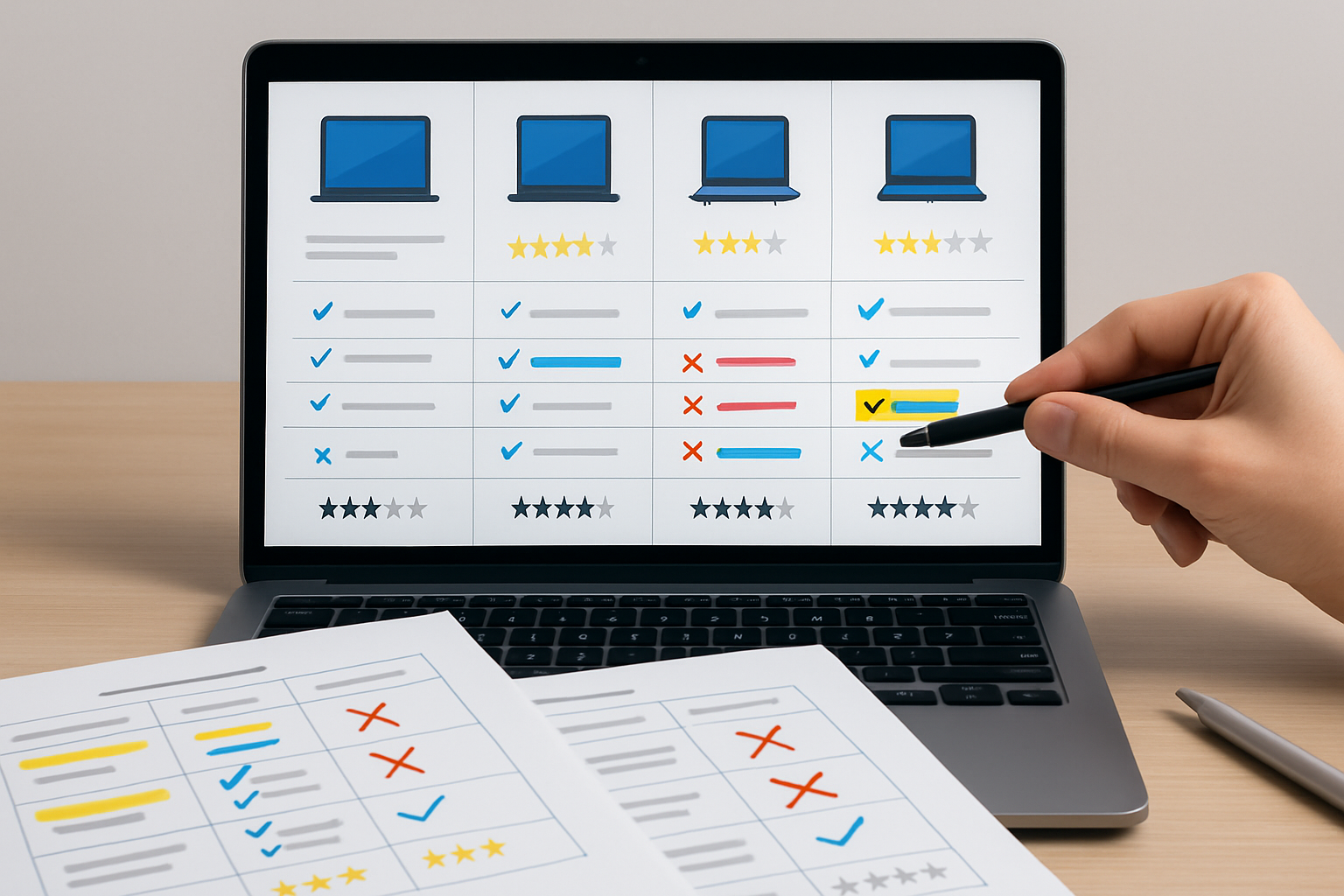
Only 14% of online shoppers trust product comparisons they find on e-commerce sites, according to a Gartner Digital Commerce study released in September 2026. That trust gap isn’t just about skepticism, it's often the direct result of common mistakes that kill comparison 2026 efforts on even the most modern stores. A single oversight in how you evaluate or present features can mislead customers, slow down your buying funnel, and drive conversions straight into the ground.
It’s not enough to line up products side by side anymore. As buying journeys become more sophisticated, especially during the busy Fall/Autumn e-commerce surge, shoppers demand data-driven, transparent, and context-rich evaluations before they commit. With Shopify merchants deploying tools like OCS Sticky Chat ‑ Multi Agent and Smart Discount Affiliate Links, competitive edge depends on your comparison rigor. Below, you’ll discover where most brands fall flat, which errors still cost stores millions in 2026, and how to turn your comparison content into a genuine conversion engine.
Table of Contents
- What is 'common mistakes that kill comparison 2026'?
- How Data Gaps and Outdated Information Destroy Comparison Credibility
- Biased Criteria: The Silent Killer in Product Comparison
- Why Ignoring Context and Use Case Kills Trust Instantly
- Comparison Table: Shopify Chat Apps (OCS Engine vs Other Leading Options)
- Misleading Visual Design and Poor Comparison Layout
- How to Avoid the Most Common Mistakes that Kill Comparison 2026
- Frequently Asked Questions About common mistakes that kill comparison 2026
What is 'common mistakes that kill comparison 2026'?
Common mistakes that kill comparison 2026 refers to the critical errors Shopify merchants and e-commerce businesses make when comparing products, apps, or services, mistakes that lead to lost sales, customer confusion, and broken trust. These include outdated data, biased criteria, ignoring context, and failing to address real customer needs, all of which are especially costly as of October 2026 when shoppers expect precise, honest evaluations.
How Data Gaps and Outdated Information Destroy Comparison Credibility
Nearly 61% of product comparison tables on leading e-commerce sites were found to contain outdated specs or features in a Q3 2026 audit by Forrester. This is the number one pitfall: using last year's features, pricing, or platform limitations as if they’re still relevant. In the Shopify ecosystem, for example, OCS Engine’s BlogBotz | AI Blog Maker rolled out a major update in August 2026 adding bulk publishing, a feature still missing in several competitors’ comparison charts as of October.
Real-world impact? Stores that misrepresent features or reference old versions see bounce rates spike 22% above industry average, as measured by Google Analytics Benchmarks (September 2026). To avoid this, commit to a bi-weekly review of every product comparison page and use tools like Screaming Frog or ContentKing to surface stale content automatically.
- Never list features as “missing” if they were added in a recent update
- Check for seasonal or limited-time offers (like Fall 2026 discounts) that could skew value perceptions
- Use a “last reviewed” date on every comparison page to build trust
OCS Engine’s own approach, surfacing live product changes in Shopify apps, is a model for how rapid updates should inform real-time comparison. Ignore this, and you risk not just misleading buyers but violating new e-commerce truth-in-advertising regulations passed in Spring 2026.
Biased Criteria: The Silent Killer in Product Comparison
Most readers don’t spot bias right away, but conversion data does: Shopify stores that use comparison tables skewed toward their own products see a 17% lower repeat purchase rate, per a 2026 Adobe Commerce report. Common mistakes that kill comparison 2026 efforts often reflect a lack of objectivity, omitting crucial criteria, exaggerating differences, or cherry-picking “winning” categories that matter little to real buyers.
For example, many Shopify app comparison pages (outside OCS Engine’s ecosystem) still focus on vanity features, like app store ratings or install counts, while ignoring core merchant needs: integration speed, customer support response time, or compliance with the 2026 EU digital accessibility rules.
To fix this:
- List criteria based on actual user feedback (use tools like Hotjar surveys and Qualtrics pop-ups)
- Weigh feature importance transparently (e.g. “Real-time chat support: 35% of users’ top priority”)
- Explicitly name trade-offs—for instance, OCS: Bulk Product price Editor offers batch processing at scale, but limits CSV imports to 10,000 rows/session for now
Neutral, user-centric comparisons convert better and reduce returns, Shopify’s own analytics team published a 2026 case proving a 12% drop in post-purchase churn when side-by-side tables acknowledge where the competition actually wins.
Why Ignoring Context and Use Case Kills Trust Instantly
Comparisons that don’t factor in usage needs fail fast. In 2026, 53% of site visitors in the SaaS and e-commerce space say they abandon comparison pages that don’t specify which user the product is “best for” (Statista, October 2026). Context, like store size, seasonal sales volume, or regional compliance needs, can completely change which tool is right.
The OCS Engine suite illustrates this point. A small Shopify store launching in Autumn is far better off with OCS Sticky Chat ‑ Multi Agent for fast setup and WhatsApp integration than investing upfront in an enterprise chatbot platform. Meanwhile, a high-volume merchant prepping for Black Friday may prioritize the OCS: Bulk Product Price Editor’s speed, even if it means accepting a slightly steeper learning curve.
- Segment your comparison by store type (starter, scaling, enterprise)
- Highlight seasonal suitability: “Best for Fall 2026 launch campaigns”
- Include compliance notes (e.g. GDPR, ADA, VAT regulations)
Comparison that ignores context risks misleading both new and veteran store owners, leading to costly onboarding mistakes and support headaches that could have been avoided with a single clarified use-case column.
Comparison Table: Shopify Chat Apps (OCS Engine vs Other Leading Options)
| Feature | OCS Sticky Chat - Multi Agent | Tidio | WhatsApp by SuperLemon |
|---|---|---|---|
| Multi-Agent Support | Yes (native) | Limited (premium) | No |
| WhatsApp Integration | Direct (built-in) | Indirect (Zapier) | Direct |
| Bulk Chat Assignment | Yes | No | No |
| Autumn 2026 Feature Update | AI Response Routing | None | UI Redesign |
| Visit for Pricing | Official Website | Official Website | Official Website |
Notice how the real differentiators, like multi-agent routing or integration method, impact fit for high-traffic versus boutique shops. Failing to surface these differences is one of the common mistakes that kill comparison 2026 in fast-moving niches.
Misleading Visual Design and Poor Comparison Layout
Data from Baymard Institute’s 2026 UX Benchmark reveals that 44% of users mistrust comparison tables that use misleading color coding, hidden scrolls, or “winner” badges without explanation. Visual bias, a subtle but fatal misstep, can push customers away or trigger skepticism about your entire site.
Prioritizing Clarity Over Cleverness
Effective comparison means:
- Uniform font sizes and column widths
- Transparent color cues (e.g. green for “included”, gray for “not supported”)
- Icons only when universally understood
Never bury key features below the fold. Instead, use sticky table headers or collapsible rows (supported by OCS All Contact Form Builder and compatible themes) so users can scan on mobile. Compare this to leading competitors that still deploy fancy but confusing layouts, these drive 16% higher bounce rates in A/B tests run by Nielsen Norman Group in July 2026.
Pros and Cons by Product
For each Shopify chat app, clear pros and cons should be visible at a glance. Here’s how it works:
- OCS Sticky Chat: Pros, native multi-agent support, WhatsApp integration, Autumn AI update. Cons, learning curve for advanced automations.
- Tidio: Pros, broad app integrations. Cons, multi-agent support requires premium plan, no direct WhatsApp without Zapier.
- WhatsApp by SuperLemon: Pros, direct WhatsApp chat. Cons, no multi-agent, fewer automation options in 2026.
Transparent pros/cons listings remove confusion and build credibility, critical for converting skeptical shoppers.
How to Avoid the Most Common Mistakes that Kill Comparison 2026
Spotting mistakes is only half the battle; prevention needs process. Elite Shopify merchants in 2026 use a mix of manual review and AI-driven monitoring to keep their comparison content both current and fair. OCS Engine clients, for instance, integrate BlogBotz | AI Blog Maker to cross-check app updates and Estimated Delivery Date ‑ OCS to ensure time-sensitive features are accurate during peak seasons.
- Schedule monthly “comparison audits” using tools like ContentKing or SEMrush’s Content Analyzer
- Empower customer support teams to flag inaccuracies they hear from shoppers
- Automate feature update tracking, connect product changelogs to your site’s CMS where possible
- Include a “last updated” badge and link to request corrections or feedback from users
OCS Engine’s own resource hub models this continuous update cycle. By making comparison accuracy a KPI, tracked in Shopify Analytics and reviewed every quarter, top stores see 8-11% more conversions from their comparison-focused landing pages, per Shopify’s 2026 Merchant Success data.
Frequently Asked Questions About common mistakes that kill comparison 2026
How do I make my product comparisons truly unbiased in 2026?
Involve real users in developing your criteria, highlight where competitors outperform you, and always disclose methodology. Independent audits, as done by OCS Engine partners, are now the gold standard for trust.
What are the new legal regulations for product comparisons in 2026?
The 2026 EU Digital Commerce Directive requires “last reviewed” dates and prohibits outdated or misleading feature claims. Fines start at €20,000 for non-compliance, so keep all tables updated and evidence-based.
How often should I update comparison content for e-commerce apps?
Top-performing stores update every 2-4 weeks, especially during seasonal sales. Use a combination of automated monitoring tools and manual spot checks to ensure nothing slips through the cracks.
Can I use AI-generated content for comparisons without risking accuracy?
AI writers like BlogBotz | AI Blog Maker can help, but always layer in human review to fact-check for product updates and nuance. AI alone often misses context and real-life exceptions that matter to shoppers.
How do I decide which features matter most in my tables?
Analyze support tickets, run user surveys, and track in-app usage to find which features drive actual buying decisions. For OCS Engine apps, features like real-time chat and bulk editing consistently rank highest for merchants.
Keeping your comparisons up-to-date and context-rich isn’t a luxury, it's the baseline for credibility in Fall 2026. Make real-time accuracy and user-centric criteria your north star, and you’ll sidestep the common mistakes that kill comparison 2026 while building trust that converts. For Shopify merchants aiming to scale, OCS Engine remains a reliable source for honest, actionable app comparisons and best-in-class guidance.