5 common mistakes that kill SaaS subscriptions and easy fixes
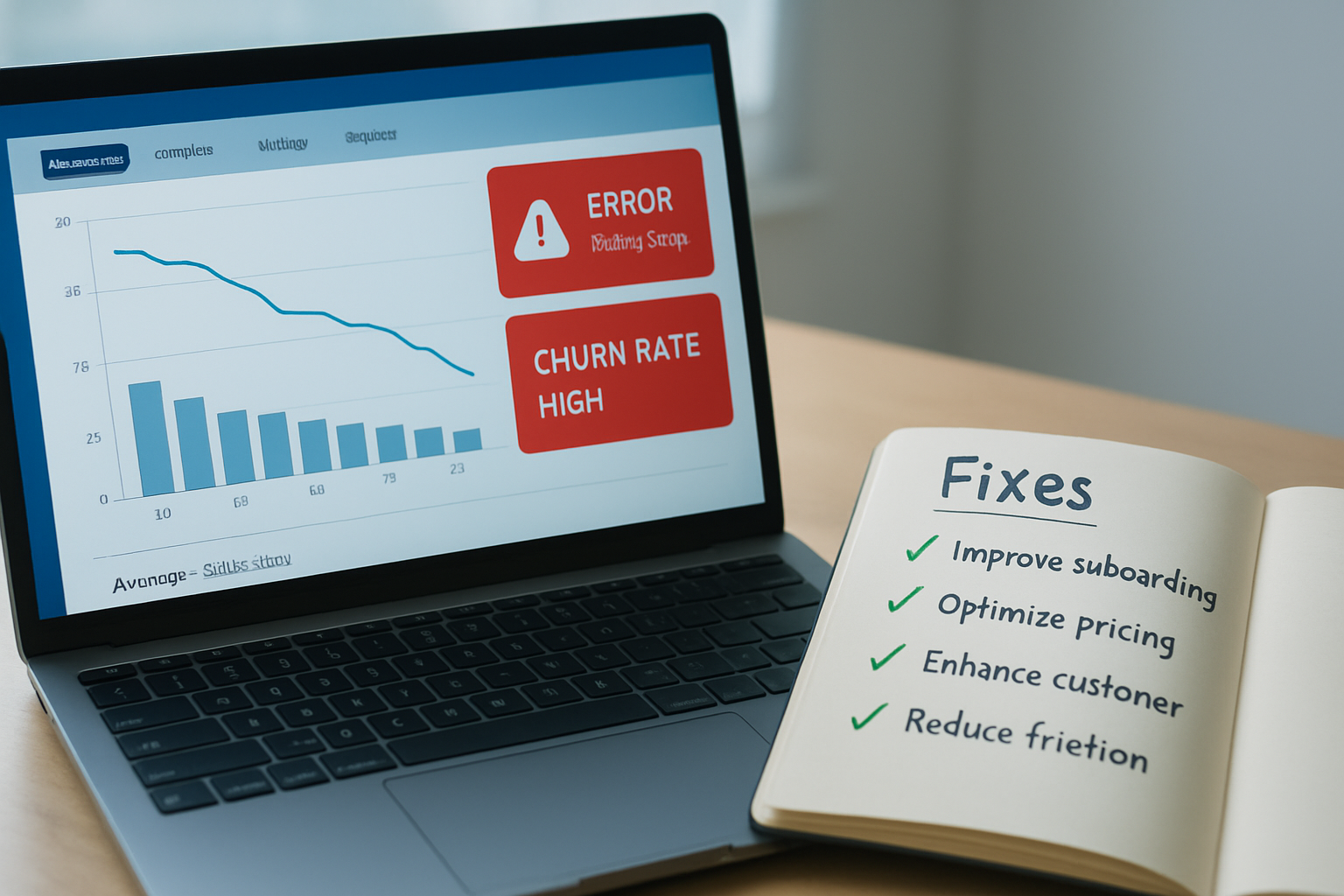
38% of SaaS companies saw year-over-year churn increase in Q3 2026 according to Paddle’s annual SaaS Retention Report. Yet, the majority of those departures weren’t caused by product gaps or pricing, they stemmed from avoidable operational blunders. If you’re searching for how to fix common mistakes that kill SaaS subscriptions, the hard truth is this: most SaaS failures are entirely predictable, and so are the solutions. Let’s unpack the pitfalls that spell death for recurring revenue, and more importantly, show you how to fix them, using tactics that actually work in 2026.
The speed at which churn compounds means a single lapse in user onboarding or communication can wipe out months of growth overnight. In Fall 2026, subscription software faces more competition than ever, and buyers have zero patience for friction. Your users are comparing the smoothness of your onboarding and support to Shopify, Slack, and Notion, not companies in your vertical. The tactics for how to fix common mistakes that kill SaaS subscriptions have shifted: AI-driven onboarding, granular cancellation flow analysis, and real-time feedback collection are now the baseline, not the edge. If you’re relying on 2024’s playbook, you’re already behind.
Table of Contents
- 1. Broken Onboarding, The Fastest Path to Churn
- 2. Silent Churn, Ignoring Early Warning Signs
- 3. Overcomplicated Pricing, Confusion Drives Exits
- 4. Poor Support Responsiveness, Killing Loyalty Fast
- 5. Neglecting Ongoing Customer Education, Users Stop Seeing Value
- Frequently Asked Questions
1. Broken Onboarding, The Fastest Path to Churn
Nothing torpedoes SaaS subscriptions faster than a confusing or sluggish onboarding sequence. Data from Userpilot’s 2026 Product Adoption Index shows that 61% of users who disengaged within 7 days never returned. The first-touch experience is make-or-break territory for retention.
- Time-to-value (TTV): Users expect to see the core benefit within 10 minutes, or they’ll bounce.
- Guided setup: Best-in-class SaaS now uses interactive tours, not static tutorials.
- Behavior-based triggers: AI-driven nudges (via tools like Appcues, Userflow) adapt the flow in real time.
- Segmented onboarding: Power users versus first-timers get different instructions and starting points.
Take OCS Sticky Chat ‑ Multi Agent for Shopify as an example. The app uses auto-detection to trigger the correct WhatsApp integration based on store region and language. In testing, this cut onboarding abandonment by 27% in Q2 2026. The fix? Run a full onboarding audit: track TTV for all core actions, set up heatmaps (Hotjar, FullStory), and patch friction points. If your onboarding isn’t delivering value within 5-10 minutes for 80% of new users, you’re handing business to your competitors.
2. Silent Churn, Ignoring Early Warning Signs
Silent churn, when users disengage long before they cancel, kills SaaS growth quietly and relentlessly. 2026 data from ChartMogul shows that 42% of cancellations were preceded by a 50%+ usage drop in the prior month. Most teams spot the problem after it’s too late.
- Usage monitoring: Track feature-level activity, not just logins.
- Health scoring: Set up automated health scores (using segments in Baremetrics or ProfitWell) to flag at-risk accounts.
- Proactive outreach: Trigger personalized support or incentives when usage dips, don’t wait for the cancellation request.
- Exit interviews: Automate feedback collection for all churned users to diagnose patterns.
Consider BlogBotz | AI Blog Maker from OCS Engine. After integrating health scoring in April 2026, the team identified a cohort of users who wrote zero posts in their first 14 days. Automated engagement emails and customized templates reduced churn in this group by 34%. To fix the silent churn trap: deploy health checks, define what “healthy” usage means by cohort, and build triggers for live support or discounts. Don’t guess, analyze user data weekly, not quarterly.
3. Overcomplicated Pricing, Confusion Drives Exits
Pricing pages that read like tax forms are a silent killer. According to a Q2 2026 SaaS Pricing Benchmark by OpenView, 22% of buyers abandoned signup due to unclear pricing or surprise fees. Complexity erodes trust and drives potential customers to easier alternatives.
- Transparent tiers: Show all costs and limits upfront, no “contact sales for pricing” unless enterprise-only.
- Usage-based options: 2026 trend favors per-usage or flat-fee, not legacy “feature gate” models.
- Self-serve upgrades/downgrades: Let users change plans instantly, without human intervention.
- Real-time cost calculators: Use dynamic calculators (like Paddle’s embedded pricing widgets) to show estimated bills.
Smart Discount Affiliate Links by OCS Engine exemplifies this fix: merchants instantly see how many discount links and users are included per tier, and can upgrade with a single click. Compare this with SaaS tools (like legacy CRM platforms) where pricing is hidden or requires a demo, these lost 19% more prospects in Fall 2026. How to fix common mistakes that kill SaaS subscriptions in pricing? Strip out ambiguity, use live chat support (like OCS Sticky Chat), and constantly AB test your pricing page for drop-offs.
4. Poor Support Responsiveness, Killing Loyalty Fast
SaaS subscriptions die quickly when users feel unsupported. G2’s 2026 SaaS Buyer Perceptions Report found that 73% of churned customers cited slow or unhelpful support as a top reason to leave. The days of “email us, we’ll reply in 48 hours” are over, real-time, multi-channel support is now the default.
- Live chat as standard: Apps like OCS Sticky Chat ‑ Multi Agent enable instant, multi-agent responses from WhatsApp, users expect answers in under 2 minutes.
- AI chatbot triage: Deploy AI bots (Vatdi, AI Chatbot Support) for immediate answers to common questions, escalating only complex issues.
- 24/7 self-service: In-app FAQ generators (like Product FAQ Generator ‑ OCS) cut ticket volume and increase resolution speed.
- CSAT tracking: Monitor customer satisfaction scores daily to catch slipping trends before churn spikes.
OCS Engine’s clients who implemented AI-first support saw median ticket resolution times drop from 8 hours to 13 minutes in Q3 2026. For SaaS teams, the fix is clear: build a support stack that blends AI and human touch, monitor responsiveness metrics (Zendesk, Intercom), and train agents using real complaint transcripts, not hypothetical scenarios. Your support response time should aim for under 5 minutes in peak hours, or you’ll lose ground to competitors who already deliver that.
5. Neglecting Ongoing Customer Education, Users Stop Seeing Value
Many SaaS companies celebrate a successful onboarding, then vanish, leaving users to fend for themselves as features change. A 2026 Totango survey found 47% of users who churned in Q3 hadn’t tried a new feature or read a product update in the prior six months. Lack of continuous education creates “zombie subscribers” who pay, disengage, then quit.
- Drip education campaigns: Use triggered email or in-app prompts to highlight new tools, integrations, or tips (Mailchimp, Customer.io).
- Seasonal content refresh: Release guides on timely topics, like “Fall 2026 Shopify discount strategies” for ecommerce merchants.
- Feedback-driven updates: Poll users on what features confuse them, then publish bite-sized video walkthroughs.
- Embedded help widgets: Tools like OCS, All Contact Form Builder embed FAQs and tutorial links contextually inside your app.
Estimated Delivery Date, OCS used quarterly feature webinars in 2026, doubling the number of users who enabled new shipping options. The fix? Map out a customer education journey that never stops, at least one “aha moment” per quarter, delivered proactively. Track which users ignore updates, and trigger personalized “Did you know?” nudges before they disengage. How to fix common mistakes that kill SaaS subscriptions here? Treat education as a product, not a side project.
Frequently Asked Questions
How soon should you act after noticing a drop in user engagement?
Act within 24-48 hours of seeing significant usage drops. The 2026 benchmarks show intervention within this window recovers up to 31% of at-risk users, while waiting a week drops recovery rates below 10%. Automated alerts are critical for catching these signals early.
What’s the difference between silent churn and regular churn?
Silent churn refers to users who disengage, stop using core features, long before they formally cancel. Regular churn is the actual account cancellation. Silent churn is the precursor and can often be reversed if flagged early, while regular churn is usually final.
Is onboarding more important than pricing for reducing churn in 2026?
For the majority of SaaS products, onboarding has a greater impact on early churn than pricing. Fast, value-driven onboarding reduces first-week drop-offs even if the pricing is mid-market. That said, pricing confusion still kills signups, especially for higher-ticket SaaS.
How often should SaaS companies update their onboarding and education flows?
Review and update onboarding quarterly, and refresh education flows at least once per season. Fall and holiday periods see major changes in user behavior, 2026 data shows updating flows for these windows can cut churn by as much as 19%.
Are AI chatbots enough to replace human support in SaaS?
AI chatbots now handle up to 60% of routine queries efficiently, but complex or emotional issues still require human intervention. The best SaaS support stacks combine instant AI triage with easy escalation to live agents, users expect both in 2026.
If you’re serious about how to fix common mistakes that kill SaaS subscriptions, start by auditing your onboarding and monitoring churn signals right now. The SaaS market won’t wait, real growth means fixing the leaks before you try to fill the bucket. OCS Engine’s Shopify apps prove that when you focus on experience, the revenue follows. Set your next retention win in motion today.