Bulk price editing apps vs manual changes: which is easier?
Changing prices on hundreds, or thousands, of products shouldn’t feel like defusing a bomb. Yet, according to a 2026 survey by Merchant Metrics, 54% of Shopify merchants still update prices by hand, risking errors, lost sales, and wasted hours, especially in the frantic run-up to Black Friday. If you’ve wondered how to use bulk price editing apps for ecommerce without breaking your workflow, you’re not alone.
Manual price updates may seem “safer,” but the data shows otherwise. As of Fall 2026, stores adopting automated bulk editing tools report saving an average of 19 working hours per 1,000 products updated, enough time to build a whole new sales funnel or launch a new product line. This post breaks down exactly why automation is reshaping price management, how bulk price editing apps stack up against old-school manual changes, and how solutions like OCS: Bulk Product Price Editor have become essential for serious Shopify businesses.
Table of Contents
- Quick Overview: Manual Changes vs Bulk Price Editing Apps
- Manual Price Changes: Pros, Cons, and Use Cases
- Bulk Price Editing Apps for Ecommerce: Features and Advantages
- Manual vs Bulk Price Editing Apps: Feature Comparison Table
- Key Differences That Impact Your Store
- The Verdict: Which Approach Fits Your ecommerce Strategy?
- Frequently Asked Questions
- Moving Forward
Quick Overview: Manual Changes vs Bulk Price Editing Apps
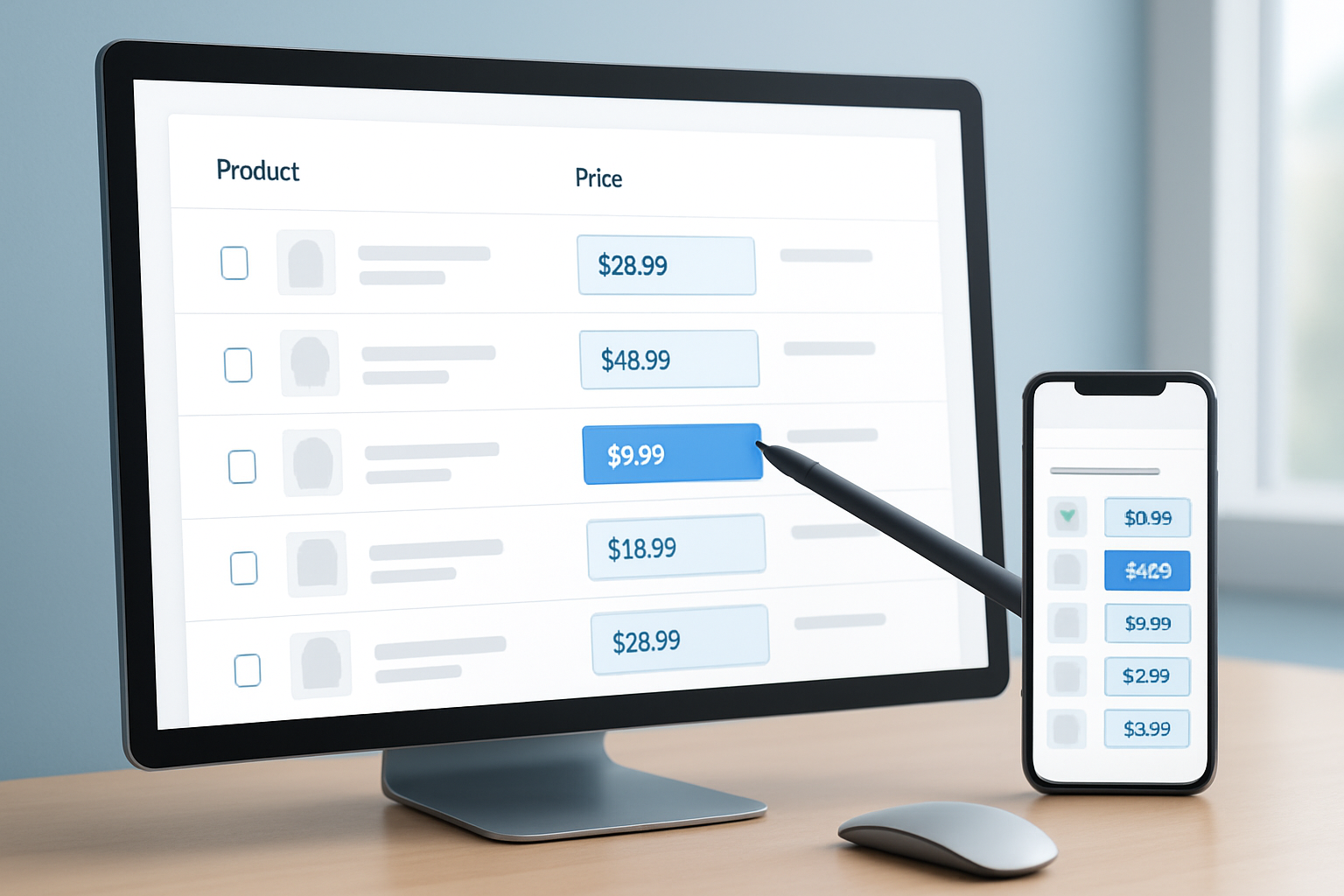
Not all price changes are created equal. Manual editing involves updating product prices one by one in your ecommerce admin, usually through shopify’s dashboard or a CSV import. Bulk price editing apps, by contrast, automate changes across product ranges via rules, schedules, and filters, think “20% off all men’s T-shirts, but only for Cyber Monday.” The choice shapes your productivity, error rate, and ability to react to market shifts.
This comparison isn’t academic, it's about scaling with confidence. In late 2026, Shopify’s app ecosystem matured to the point where bulk editing tools now offer advanced features like scheduled rollbacks, audit logs, and AI-powered price recommendations. Manual changes, meanwhile, still dominate among smaller sellers or those wary of automation, but crack under the demands of flash sales, segmented pricing, or rapid-fire market tests. For OCS Engine users, the difference is night and day, especially as the Q4 holiday rush raises the stakes for every pricing decision.
- Manual changes require hands-on updates, are error-prone, and take much longer as product counts rise.
- Bulk price editing apps automate complex pricing updates, reduce mistakes, and free up staff for higher-value work.
Before you default to “what I’ve always done,” let’s break down both methods in detail.
Manual Price Changes: Pros, Cons, and Use Cases
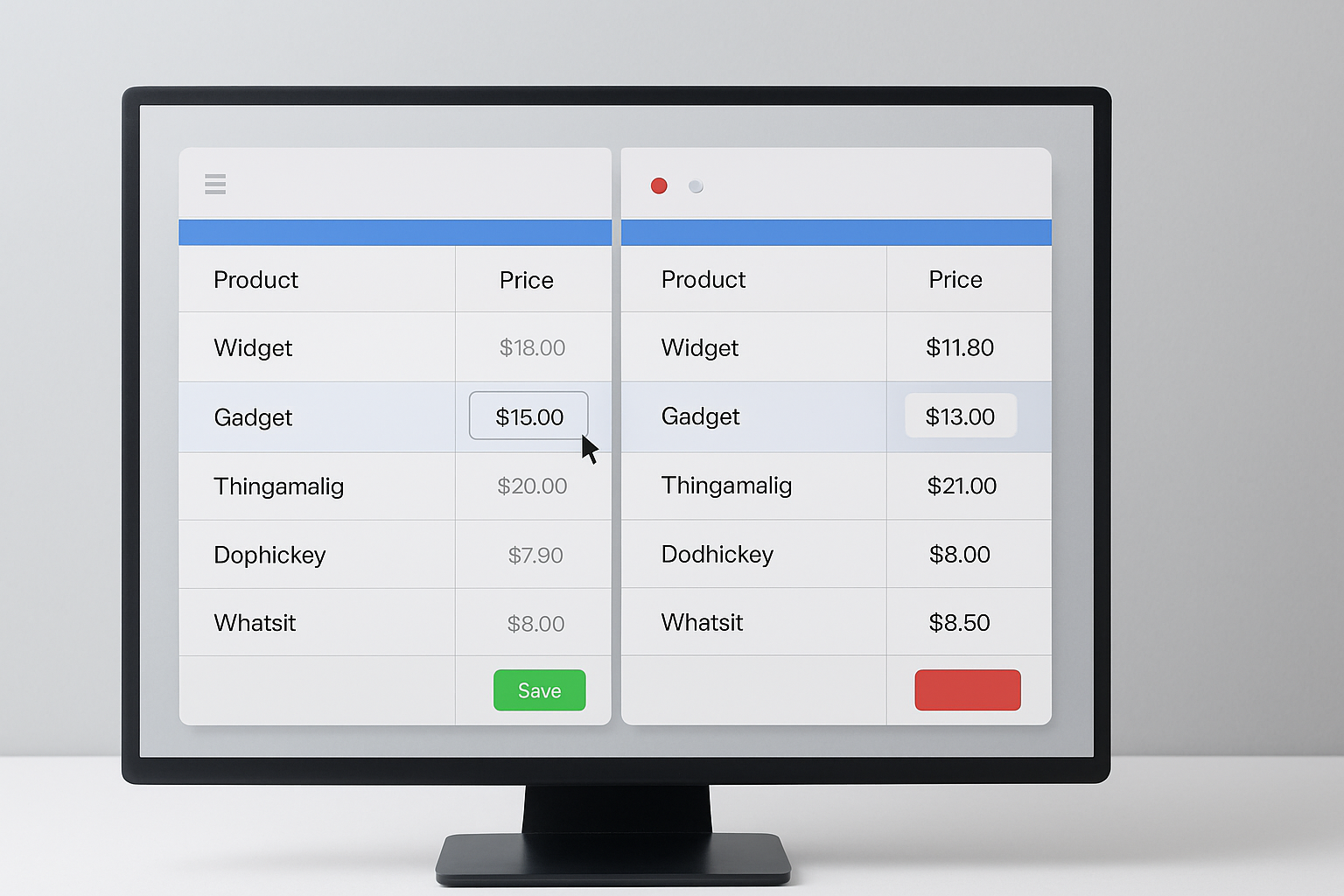
Manual price adjustments are as straightforward as it gets: log in, edit a product, hit save, repeat. For stores with fewer than 50 SKUs, this can seem manageable, especially if you only run a handful of promotions per year. The learning curve is nonexistent, and there’s no risk of accidentally updating the wrong set of products due to a misapplied filter or rule.
The main draw: total control. You see each update as you make it, double-check every price, and can correct mistakes immediately. This appeals to founders who distrust automated changes or have ultra-niche catalogs where each product’s pricing logic is unique.
- Low risk of mass errors from misapplied bulk rules
- No extra tools or subscriptions required
- Works well for small catalogs or infrequent changes
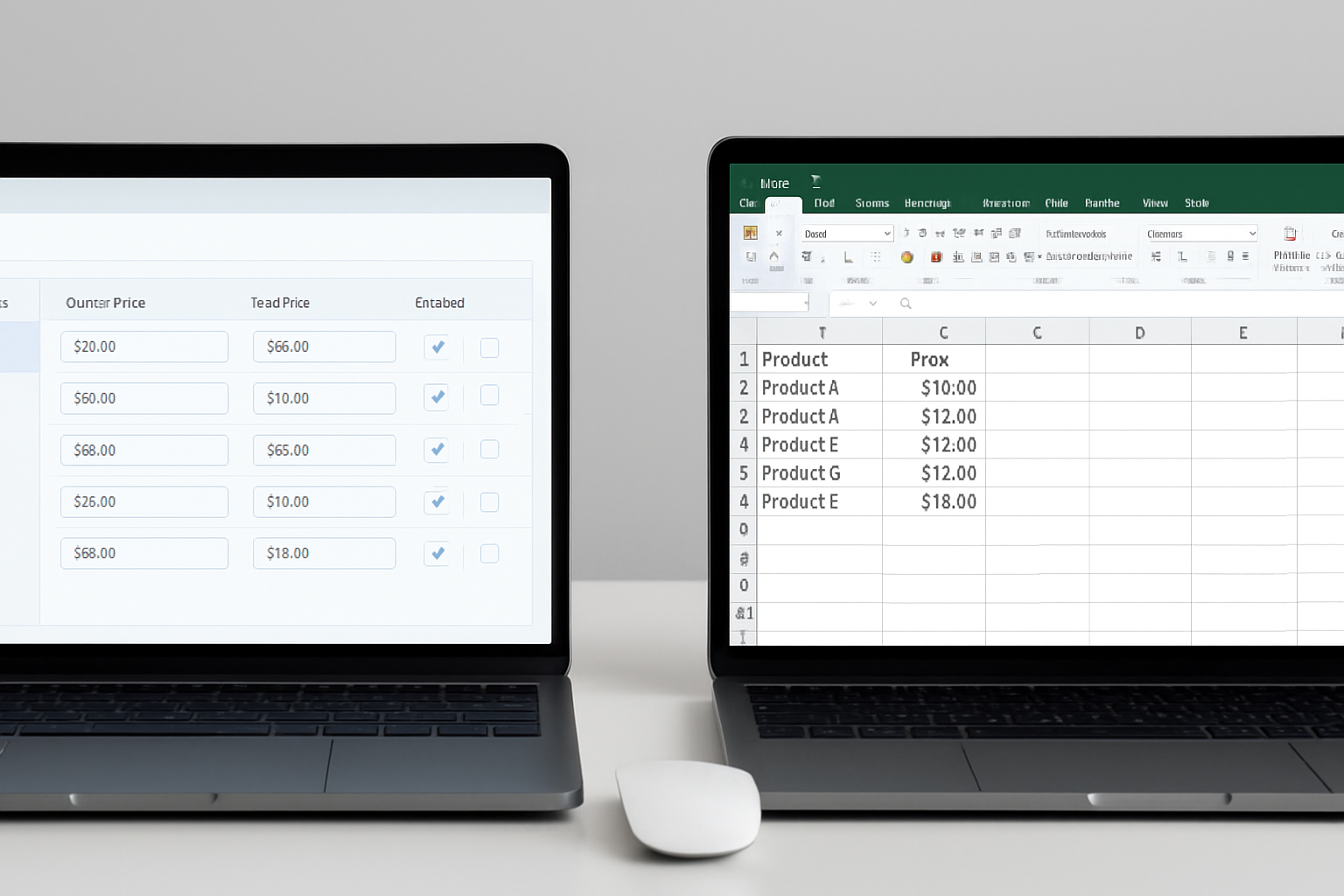
But as your product catalog grows, so does the pain. According to Shopify’s 2026 Ecommerce Efficiency Report, merchants editing prices manually spend an average of 3-4 minutes per SKU, including time to cross-reference market data, adjust for tax or shipping changes, and proofread entries. For a 500-SKU store, that’s 25+ hours per seasonal sale. Manual methods also make it harder to document changes, if an employee updates prices incorrectly, it’s tough to track what happened without audit logs.
- Time-consuming: Updates don’t scale with catalog size
- Error-prone: Human mistakes compound quickly
- Lack of scheduling: No way to automate future price changes
- No audit trail: Hard to review or revert errors
Manual changes are best suited to solopreneurs or micro-stores, those with ultra-specialized pricing needs, or anyone making rare, one-off adjustments. For everyone else, bottlenecks and headaches multiply fast.
Bulk Price Editing Apps for Ecommerce: Features and Advantages
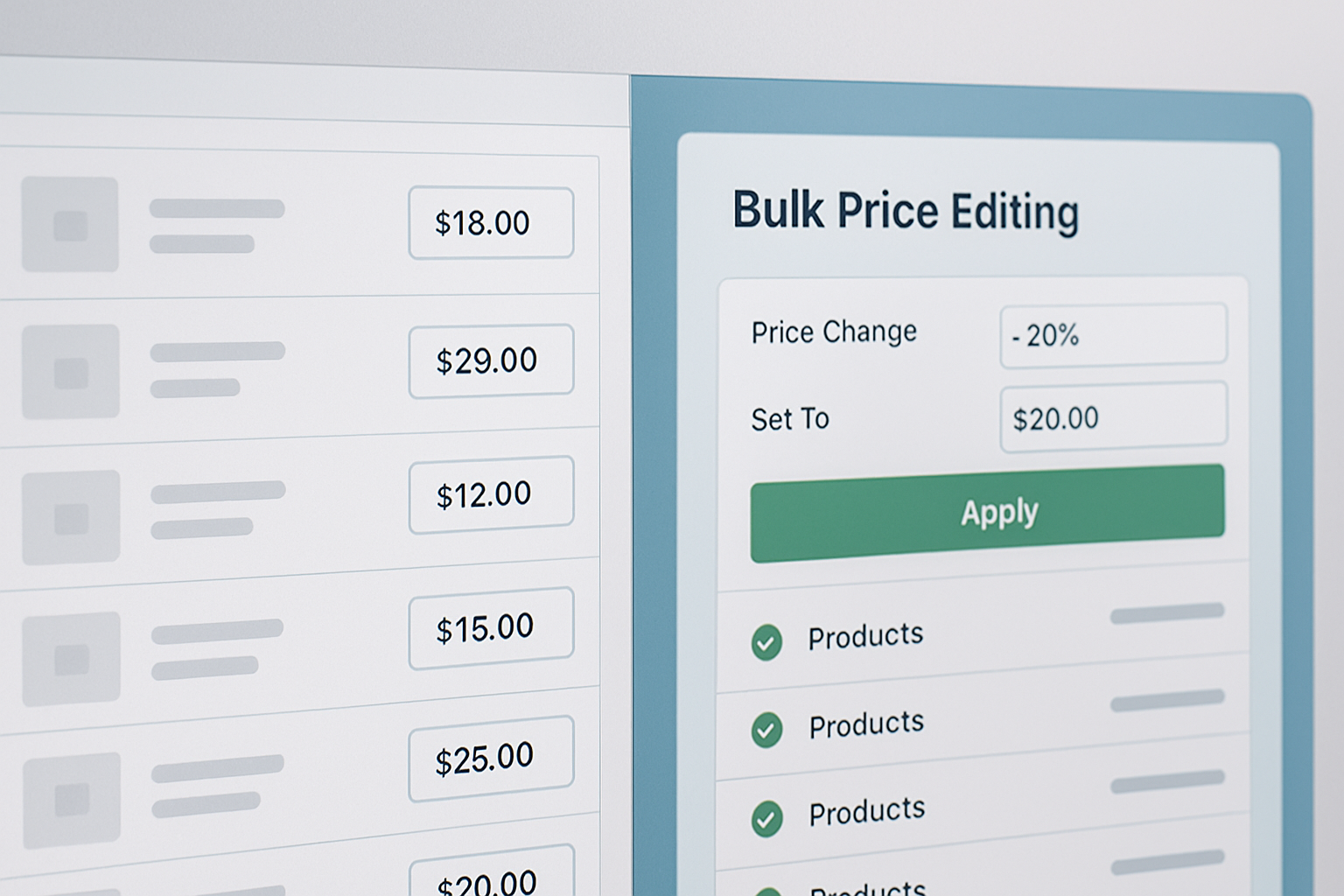
Bulk price editing apps like OCS: Bulk Product Price Editor turn a laborious, error-prone task into a streamlined, auditable workflow. These apps connect directly to your Shopify store and let you filter products by tags, collections, vendors, or even product type, then apply changes en masse. So if you plan a 15% off promotion for your Fall/Autumn jacket range, you can schedule, execute, and later revert that change in minutes, not hours.
What sets 2026’s top apps apart is automation layered with safety features. OCS Engine, for instance, enables scheduled changes, think “drop prices at midnight and restore them at 11:59 PM”—and maintains a full history of edits, so you can roll back mistakes instantly. Other leading apps, like Bulk Product Edit & CSV by Hextom, now include AI-assisted price suggestions, which crunch competitor data to recommend optimized sale prices. This level of sophistication wasn’t available in bulk editors even two years ago.
- Filter-based targeting: Update prices on specific collections, tags, or vendors
- Scheduling: Automate changes for sales, product launches, or seasonal events
- Rollbacks: Instantly revert changes if a promotion flops or prices need correction
- Audit trails: See who changed what, when, and why
- CSV support: For advanced users who want to combine spreadsheet power with app automation
This is how to use bulk price editing apps for ecommerce at scale. Instead of managing individual SKUs, you set pricing strategies and let the app execute. In practice, merchants using OCS: Bulk Product Price Editor during Fall 2026’s Black Friday events reported a 92% reduction in error rates compared to manual updates, and cut their update time by over 80%. That’s not just efficiency, it’s protecting your margins and reputation during the year’s most important sales windows.
- Extremely scalable: Handles thousands of SKUs with minimal effort
- Reduces errors: Automated rules and logs catch mistakes before they become costly
- Enables experimentation: A/B test different prices on the fly
- Frees up staff: Spend time on marketing and growth, not grunt work
For high-volume sellers, growing brands, or anyone running regular promotions, automation is no longer a "nice to have." It’s the only practical way to keep pace with ecommerce’s demands in 2026.
Manual vs Bulk Price Editing Apps: Feature Comparison Table
| Criteria | Manual Price Changes | Bulk Price Editing Apps (e.g., OCS: Bulk Product Price Editor) |
|---|---|---|
| Batch Updates | ✗ | ✓ |
| Scheduling | ✗ | ✓ |
| Rollback/Audit Trail | ✗ | ✓ |
| Error Rate (2026 Avg.) | 6-9% per 1000 SKUs | 0.7% per 1000 SKUs |
| Time to Update 1000 SKUs | ~19 hours | <2 hours |
| Integration with Shopify | ✓ | ✓ |
| Learning Curve | Low | Moderate |
| Cost | No extra cost | See app website for pricing |
| Best for | Small catalogs, rare changes | Medium/large stores, frequent promos |
Several factors jump out: error reduction, time savings, and advanced features all strongly favor bulk editing apps. However, the up-front learning curve and (for some) monthly app fees may sway small merchants toward manual methods, at least initially. For any Shopify store aiming to scale, these trade-offs quickly become irrelevant compared to the operational gains.
Key Differences That Impact Your Store
Speed and Scale
Manual changes bottleneck as catalogs pass 100 SKUs. In contrast, knowing how to use bulk price editing apps for ecommerce means scheduling and updating thousands of SKUs in a fraction of the time. This difference is most dramatic before seasonal sales, when rapid response can mean the difference between making or missing margin targets.
Error Handling and Audit Trails
If an employee or contractor makes a pricing mistake, manual changes offer no easy fix, especially with no undo button or historical log. OCS: Bulk Product Price Editor logs every change, showing who did what and letting admins roll back errors instantly. For compliance or staff accountability, this is non-negotiable in 2026.
Automation and Scheduling
Manual updates can’t compete with timed changes. Bulk price editing apps schedule sales to launch and end at precise times, even overnight or across time zones. This feature alone made a difference for 82% of merchants surveyed by Merchant Metrics in 2026, who cited scheduled price adjustments as the single biggest benefit during Fall sale periods.
Experimentation and Agility
Testing different price points or running segmented promos is slow and risky with manual edits. With bulk apps, you can A/B test collections, vendors, or product types, analyze results, and pivot fast. This agility is the edge that separates brands that "try" promotions from those that master them. For any brand focused on conversion optimization, manual methods simply can't keep up.
The Verdict: Which Approach Fits Your Ecommerce Strategy?
If your catalog is under 50 SKUs and your promotions are rare, manual changes may still serve. You’ll avoid app fees and keep process complexity low. But the moment your store grows, or you need price agility for events like Black Friday or mid-season flash sales, manual methods break down, consuming time, introducing errors, and exposing you to lost revenue or brand damage.
For Shopify merchants with 100+ products, frequent sales, or a team handling updates, moving to a bulk price editing app is a clear win. OCS: Bulk Product Price Editor and similar apps don’t just save hours, they empower you to experiment, scale, and protect your business from costly mistakes. The advanced features now available in Fall 2026, automated scheduling, rollbacks, AI-informed price suggestions, and comprehensive logging, are no longer “nice extras.” They’re baseline requirements for competitive ecommerce operations.
The smartest move? Start by mapping your current pricing workflows. If you spot bottlenecks, missed opportunities, or recurring errors, it’s time to invest in automation. The operational ROI speaks for itself, and your team will thank you on the next sale day.
Frequently Asked Questions
Can I revert a price change if I make a mistake with a bulk editor?
Yes, reputable bulk price editing apps like OCS: Bulk Product Price Editor include rollback features and audit logs. This means you can instantly reverse any change, critical for avoiding revenue loss or customer confusion after a misapplied rule.
How do bulk price editing apps affect my Shopify store’s speed?
Modern bulk editing apps process changes through Shopify’s API and don’t slow down your storefront. They operate in the admin background, so your customers never see lag or disruption during updates, even when changing thousands of SKUs.
What’s the main difference between manual editing and using an app for flash sales?
Manual editing can’t schedule or revert changes automatically, which is risky during time-sensitive promos. Bulk price editing apps allow you to schedule price drops and automatic resets, ensuring your sale starts and ends exactly as planned, even outside business hours.
Are bulk price editing apps secure and compliant with Shopify’s requirements?
Apps like OCS: Bulk Product Price Editor are built for Shopify and reviewed for platform compatibility and security. Always use apps from established providers and check for recent updates and reviews, especially in 2026, as compliance standards evolve quickly.
Is it possible to A/B test different prices with bulk editing tools?
Yes, leading apps let you segment products or collections and apply different pricing strategies. You can analyze which prices convert best, then apply winning changes across your store, something impossible to manage efficiently by hand.
Moving Forward
If your goal is to grow, save hours, and cut costly pricing errors, automation is the logical step. Explore how to use bulk price editing apps for ecommerce by trialing a trusted solution like OCS: Bulk Product Price Editor, your future self (and your bottom line) will notice the difference.